Dulce Gloria community have been recognised for their efforts in conservation and managing fishery resources in Yurua
On July 17, 2023, the Ashéninka Native Community of Dulce Gloria took an important step toward achieving the sustainable management of its communal natural resources. During an official ceremony, Enoc Ruiz, the community leader of Dulce Gloria, received two administrative resolutions from MarianoRebaza, Director of PRODUCE Ucayali, approving the fisheries management tools that the community had developed with the support of Upper Amazon Conservancy (UAC). These are the first fisheries management programs approved by the Peruvian government in the Yurúa District.
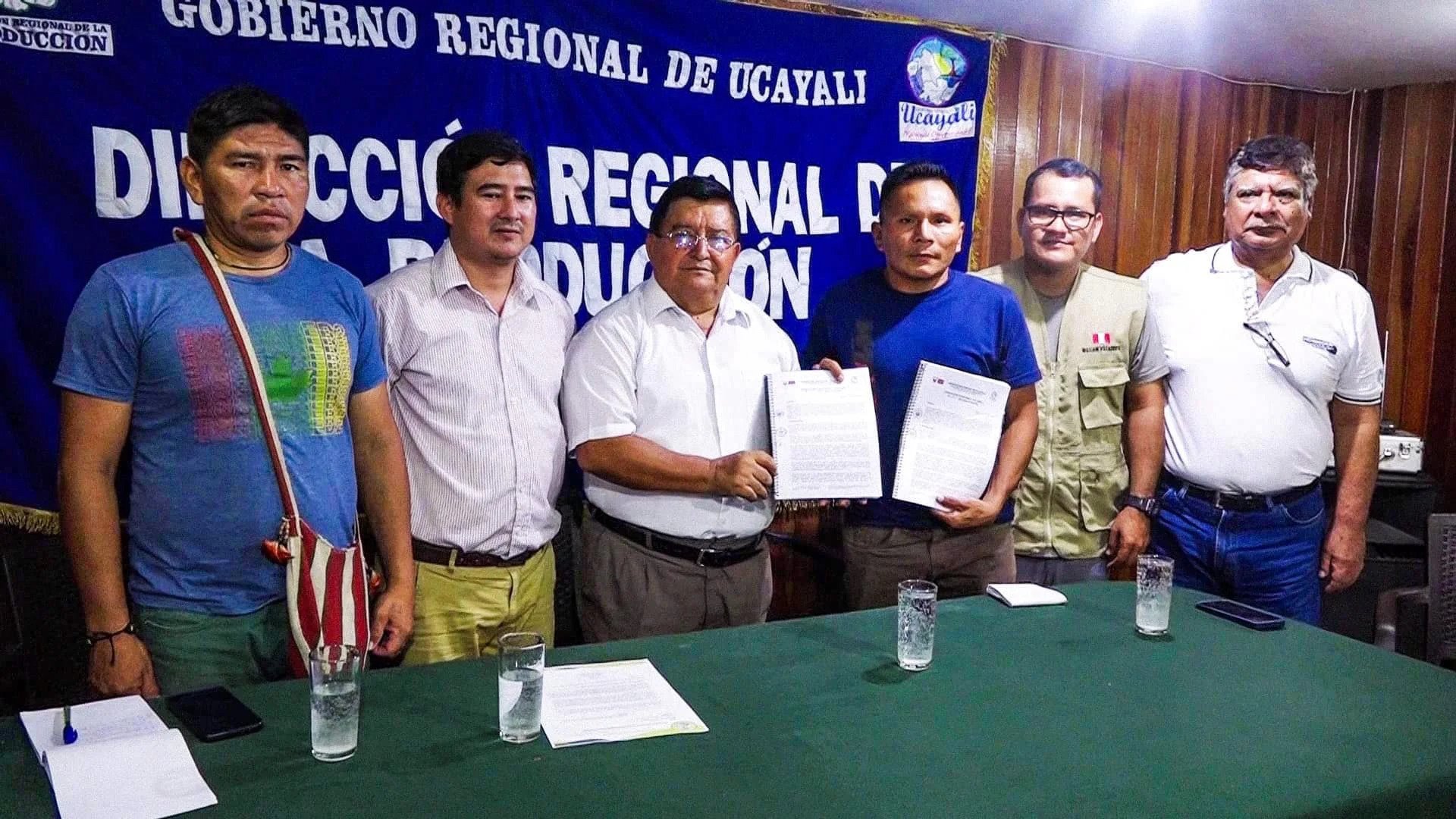
Ceremony marking the presentation of the administrative resolutions approving the Fisheries Management Programs (PROMAPE) for Rompeo Cocha and Gavilán Cocha in the Dulce Gloria Native Community. From left to right: Alfonso Rengifo, President of ACONADIYSH; Manuel Arévalo, Mayor of Yurúa District; Mariano Rebaza, Director of PRODUCE Ucayali; Enoc Ruiz, Chief of Dulce Gloria; William Villacorta, UAC Program Director; and Daniel Velarde, Deputy Director of Fisheries at PRODUCE Ucayali.
Dulce Gloria has a long history of protecting its forests and natural resources, both within the community and throughout the Upper Yurúa region. In recent years, its partnership with UAC has enabled the implementation of several conservation initiatives focused on key resources, including freshwater turtles and fisheries. To prevent overexploitation of local fish stocks, the community (supported by UAC's technical team) developed conservation and management plans for two important lakes, "cochas" within its territory: “Rompeo Cocha” and “Gavilán Cocha”. The goal is to conserve one of the Amazon's most iconic fish species, the paiche (Arapaima gigas), which is both ecologically and nutritionally important, while also ensuring a sustainable source of food and income through responsible fish production and commercialization.
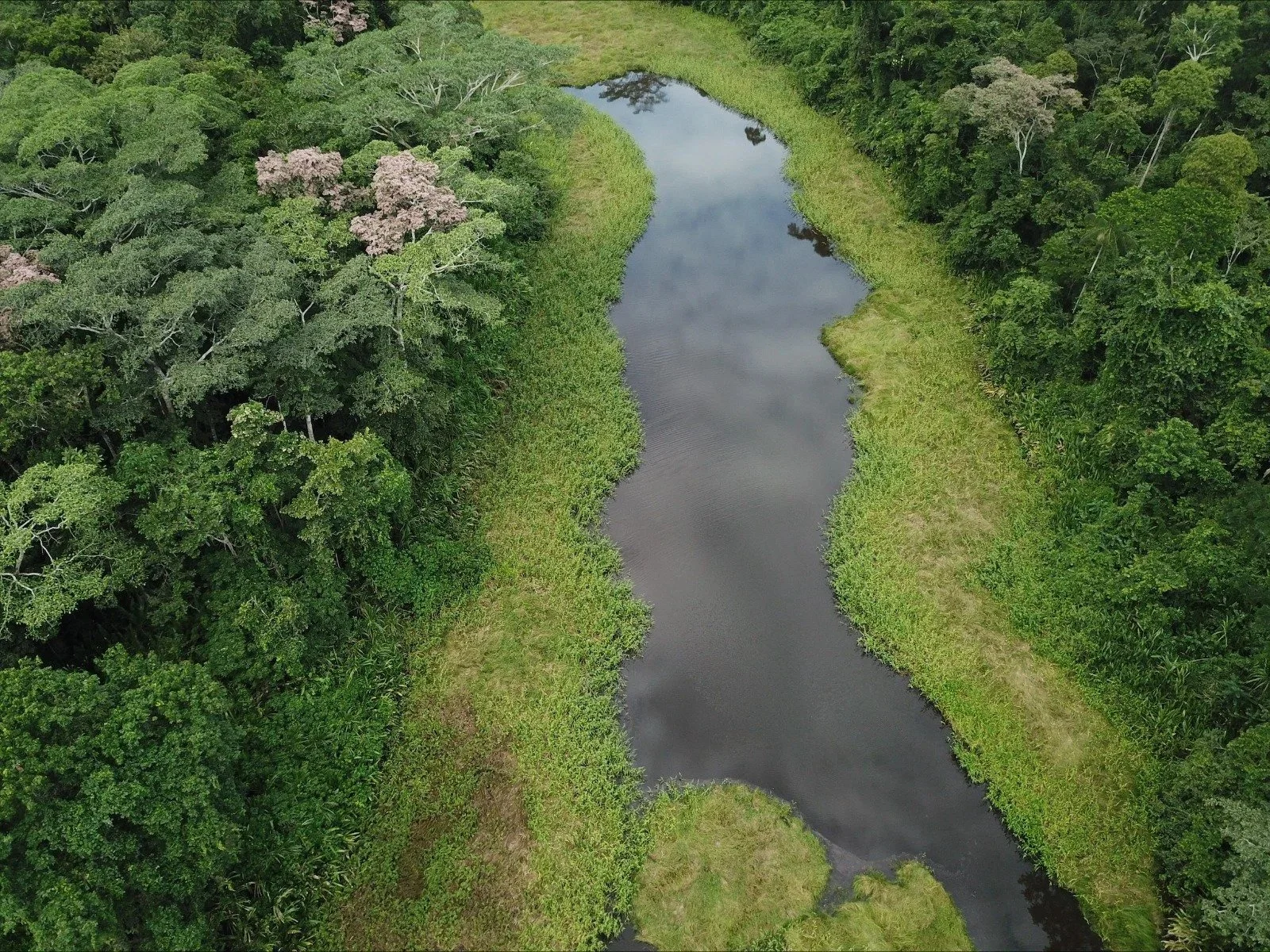
Aerial view of Gavilán Cocha, whose distinctive shape resembles a hawk ("gavilán"), giving the lake its name.
The development of a Fisheries Management Program (PROMAPE) for each lake included the creation of a Fisheries Monitoring Committee (COLOVIPE) and biological surveys of aquatic resources. These studies identified at least 10 commercially valuable fish species, including mullet "lisa", catfish such as "súngaro," and other large catfish species. Using this information, the community established designated fishing areas and sustainable harvest quotas. As a result, Dulce Gloria's fishers can now legally market fish harvested under a sustainable management system through the newly created APA Pocharipanko Fisheries Producers Association.
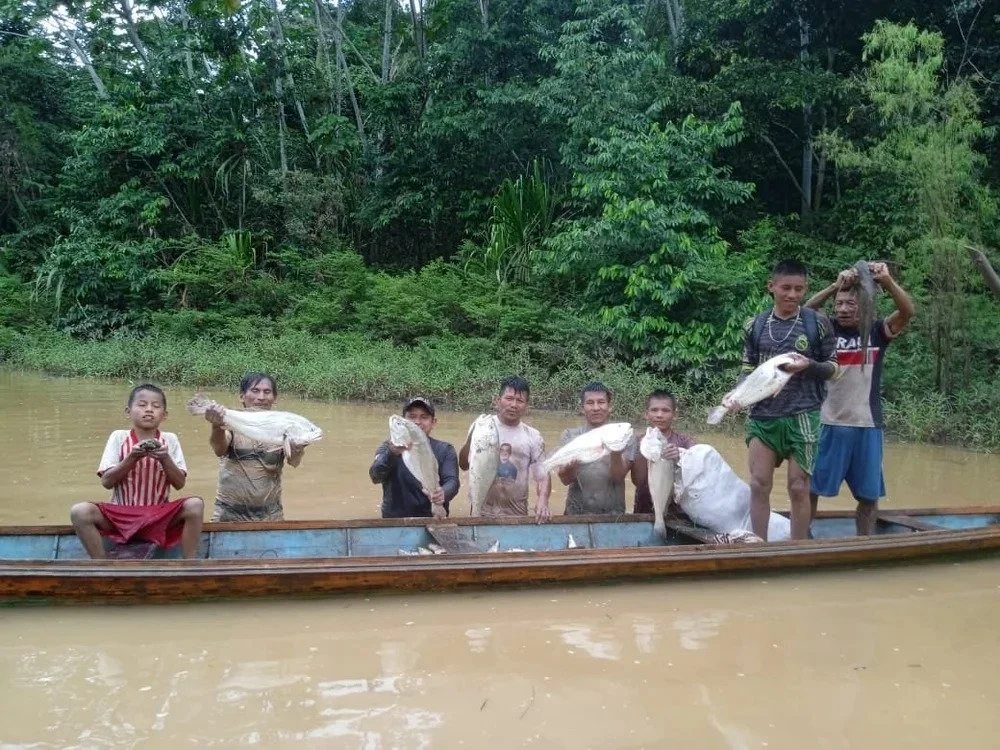
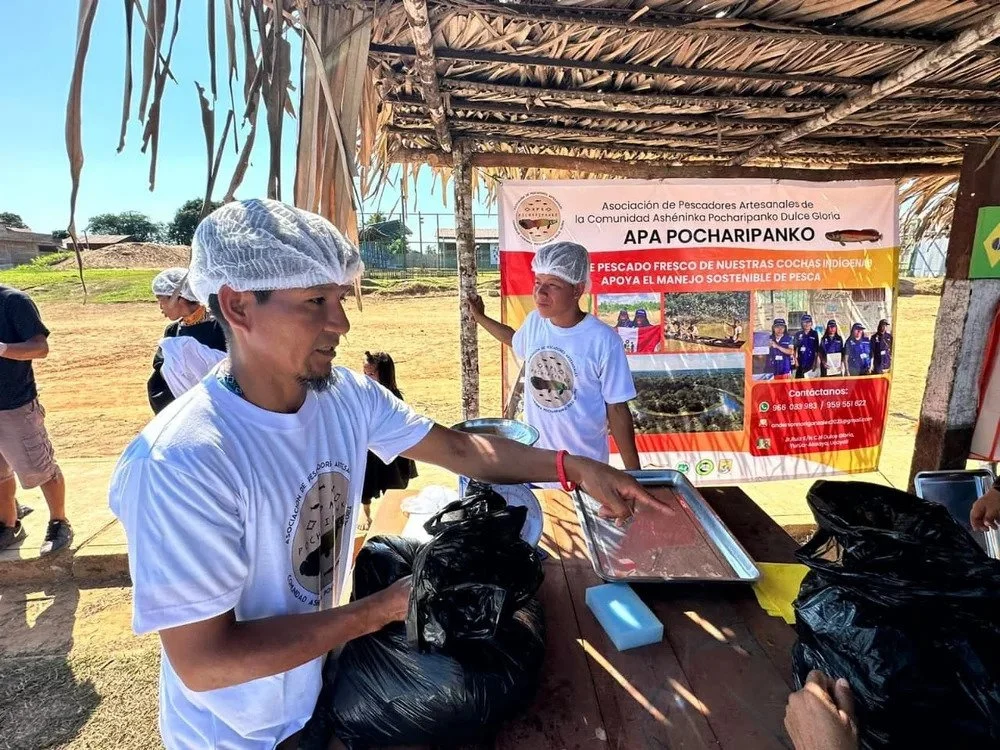
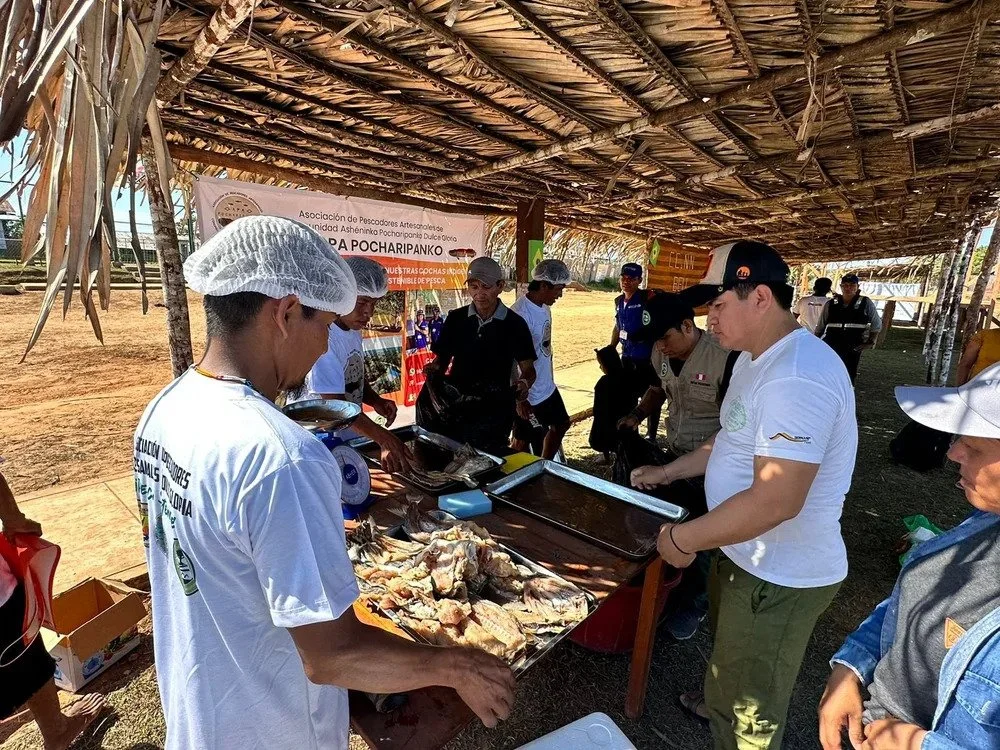
A particularly innovative aspect of the project is the PROMAPE developed for Gavilán Cocha. Within Dulce Gloria's conservation strategy, this lake is managed primarily as a refuge for fish biodiversity, especially for the paiche (Arapaima gigas), allowing populations to reproduce and recover from fishing pressure in the upper Yurúa River basin. As PROMAPE regulations do not include conservation as their sole objective, the community designated the management plan for Gavilán Cocha as an ecotourism initiative, a purpose that is recognized within the legal framework. Government authorities have welcomed this innovative approach, viewing it as an important contribution to improving fisheries policy and promoting sustainable fisheries production throughout the Ucayali region.
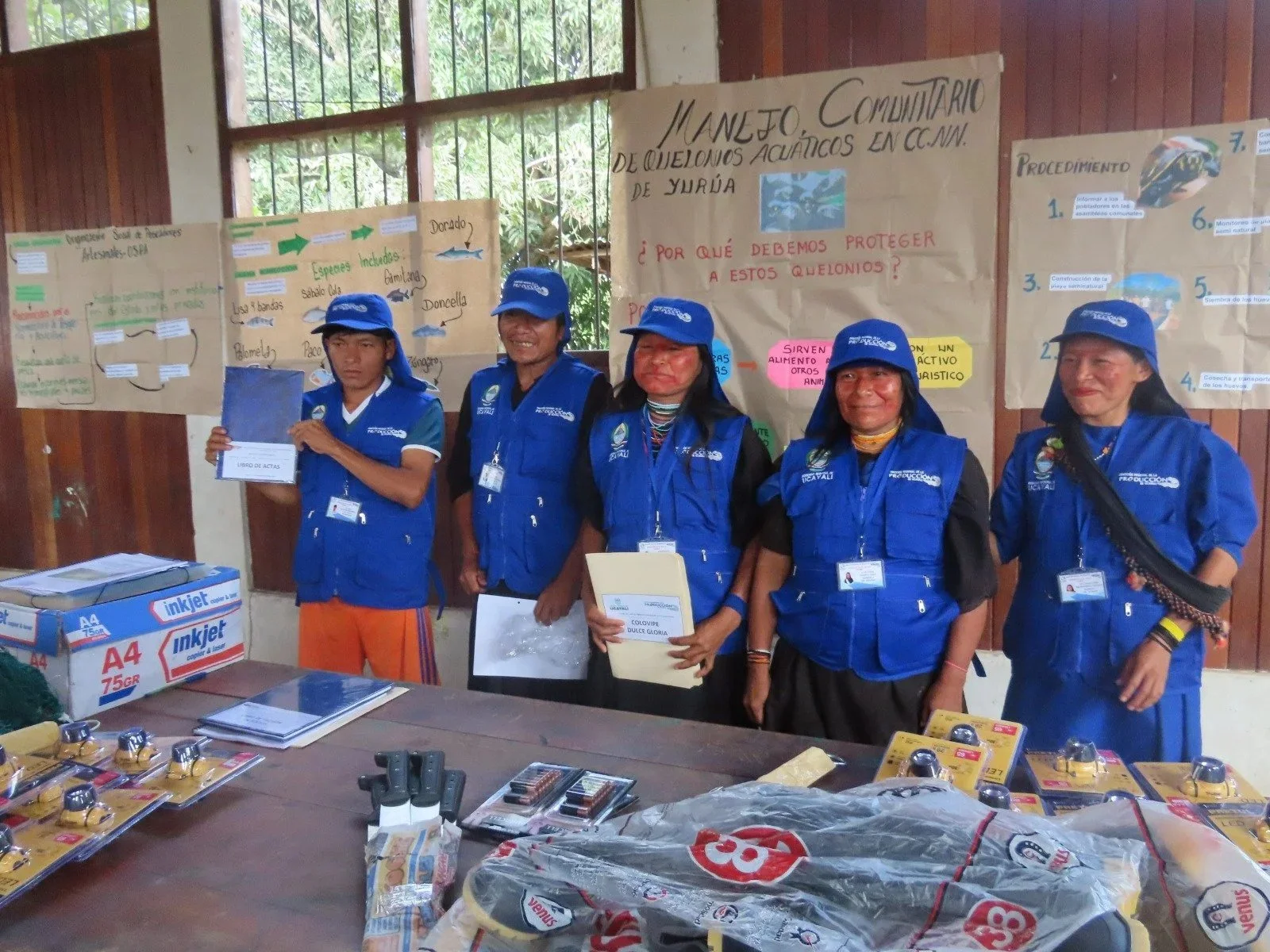
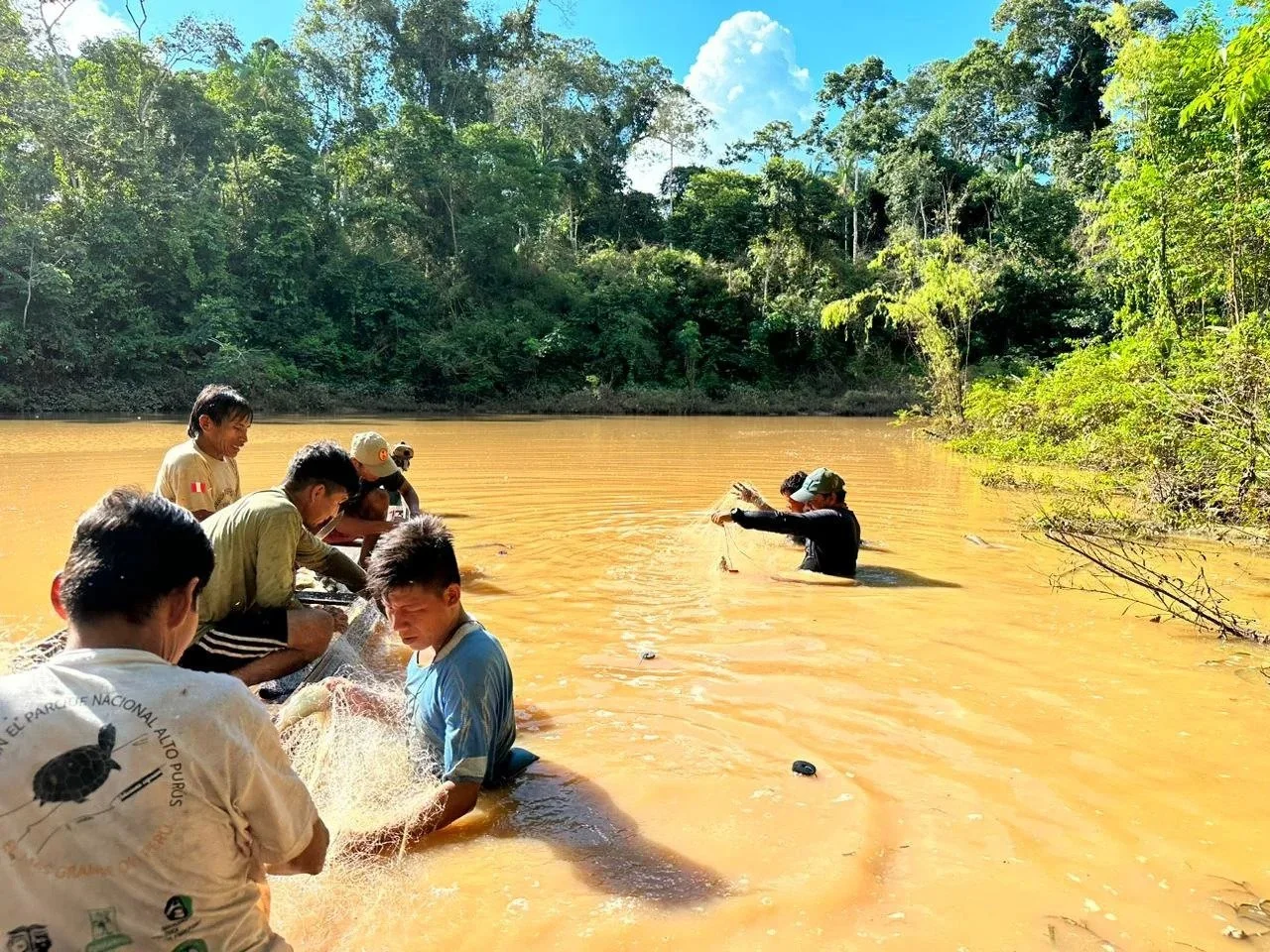
Members of the Dulce Gloria Fisheries Monitoring Committee receiving training and equipment from their partner, Upper Amazon Conservancy (UAC).
The success of this project reinforces the vision promoted by Dulce Gloria and UAC throughout the Upper Yurúa: that Indigenous communities play a vital role in conserving and sustainably managing natural resources, while leading efforts to promote sustainable development across the region. Local government authorities have also recognized the initiative as an example to guide future district development policies, and other Indigenous communities in the region are already exploring ways to replicate the model for the benefit of their own populations.
During the ceremony organized by PRODUCE and UAC, Manuel Arévalo, Mayor of Yurúa District; Alfonso Rengifo, President of ACONADIYSH; and the leaders of the San Pablo and Saweto Native Communities, Esaú Tello and Andrés Arévalo, congratulated Dulce Gloria's representatives on this significant achievement. William Villacorta, UAC's Program Director, also highlighted the importance of collaboration between Indigenous communities, civil society organizations, local governments, and the relevant public authorities in achieving sustainable conservation outcomes.
This initiative was made possible through financial support from the U.S. Fish and Wildlife Service (USFWS).