Over three days, six cultural ensembles and representatives from Amazonian communities shared music, instrument-making techniques, and traditional knowledge they hope to pass on to future generations.
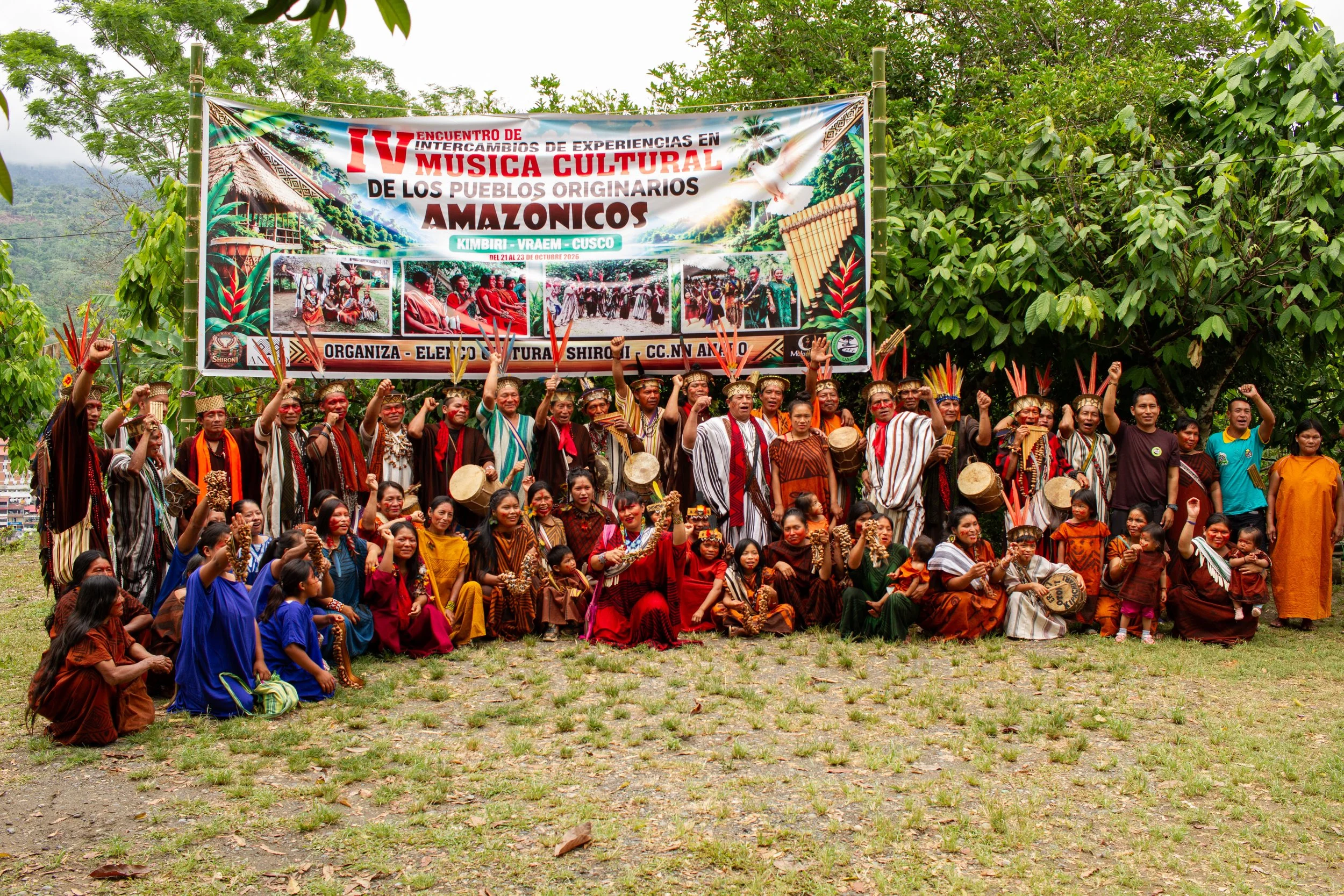
Participants at the Fourth Gathering for the Exchange of Experiences in Traditional Music, held in Anaro, Cusco / Photo: Victoria Tuesta © UAC
Pucallpa, October 29, 2026. Learning to play a traditional instrument and discovering how to make it were among the experiences shared during the Fourth Gathering for the Exchange of Experiences in Traditional Music among Amazonian Indigenous Peoples, held from October 21 to 23 in the Anaro Native Community, Kimbiri District, Cusco.
Organized by the Shironi cultural ensemble, the gathering brought together Indigenous musicians, artisans, and community representatives to exchange knowledge about music, instrument making, traditional clothing, iconography, and other cultural expressions.
Six ensembles participated: Shironi, from Anaro; Eroti, from the Matsigenka community of Kepachiari in Kimbiri; Sampakiti, from the El Milagro Native Community in Satipo; Tsonkiri, from San Miguel Centro Marankiari in Chanchamayo; Runi Chokioki, from Satipo; and Tsonkarikiti, from Pangoa.
They were joined by a delegation of eight representatives from Yurúa, from the Koshireni, Sawawo, Nueva Victoria, and San Pablo Native Communities, belonging to the Ashéninka, Yanesha, and Yaminahua peoples. Their participation provided an opportunity to exchange musical experiences and cultural knowledge with representatives from other Amazonian communities.
Upper Amazon Conservancy (UAC) provided technical and logistical support for the delegation's participation and the gathering itself.
Learning to Play, Make, and Share
Musical performances were complemented by hands-on workshops in which participants shared techniques for making instruments, arrows, headdresses, feather accessories, and traditional clothing.
One of the skills shared was making the sonkari, a traditional musical instrument of the Asháninka people. Marino Samaniego Domingo, Asháninka director of the Tsonkiri ensemble from the San Miguel Centro Marankiari Native Community in Perené, shared his knowledge of how to make the instrument with participants from other communities, including representatives from border areas.
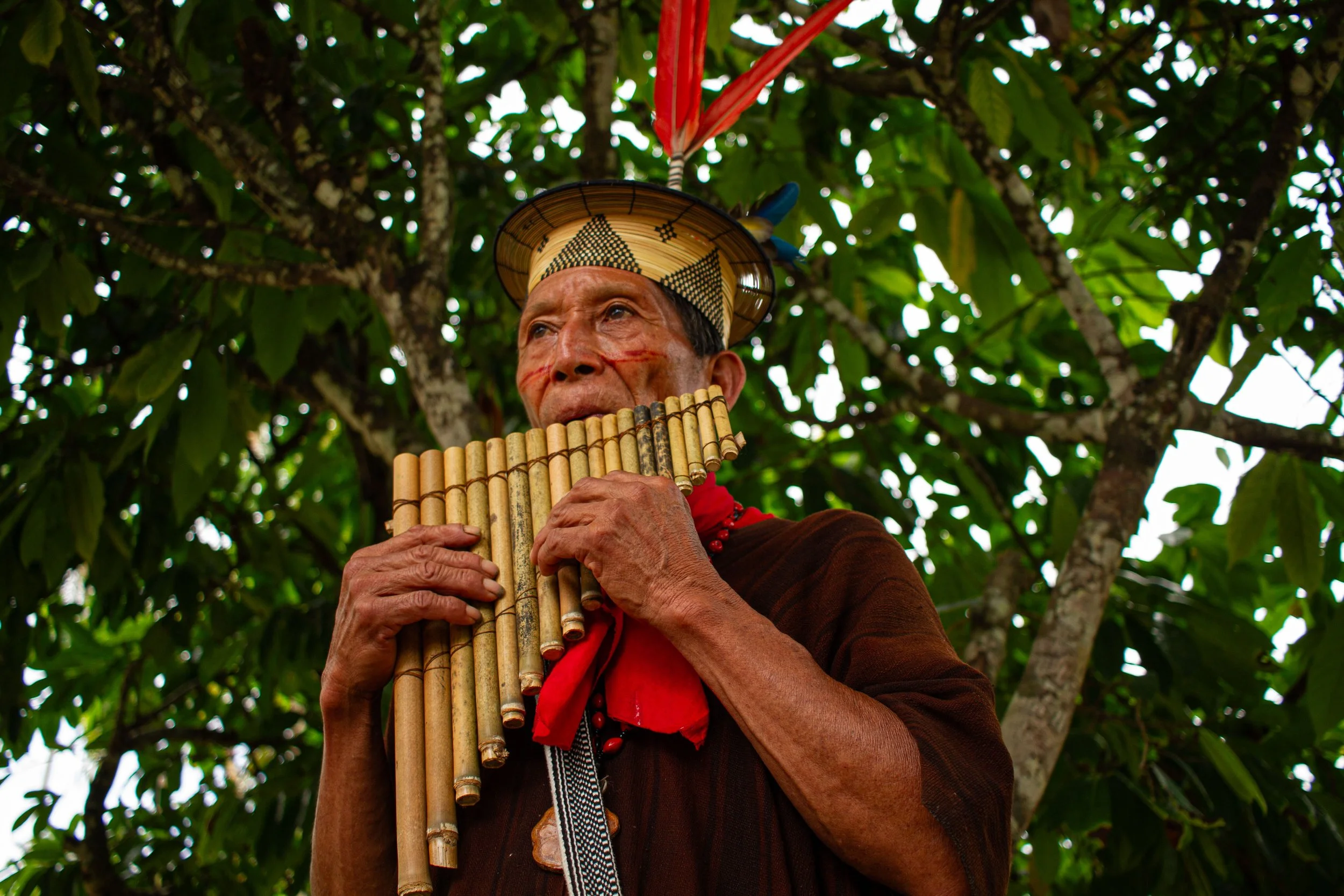
Marino Samaniego Domingo, Asháninka director of the Tsonkiri ensemble, plays the sonkari, a traditional wind instrument / Photo: Victoria Tuesta © UAC
For Iván Jacobo Shimiñari, Asháninka director of the Sampakiti ensemble from the El Milagro Native Community in Satipo, the exchange offered an opportunity to discover melodies and rhythms from other groups while learning the techniques needed to make their own instruments.
"Not only learning how to play the rhythms of the sonkari, but also how to make it," he said.
Music also provided a space for sharing knowledge connected to community life. During his participation, Iván performed a song in the Asháninka language and explained its connection to masato, a traditional fermented cassava drink, community gatherings, and his people's worldview.
The workshops also included traditional iconography and the making of cushmas, garments worn by different Amazonian Indigenous peoples. Daniel Morales Samaniego, Asháninka director of the Shironi ensemble from Anaro, emphasized that these activities provide opportunities to share knowledge related to cultural identity, spirituality, and practices preserved by community elders and traditional knowledge holders.
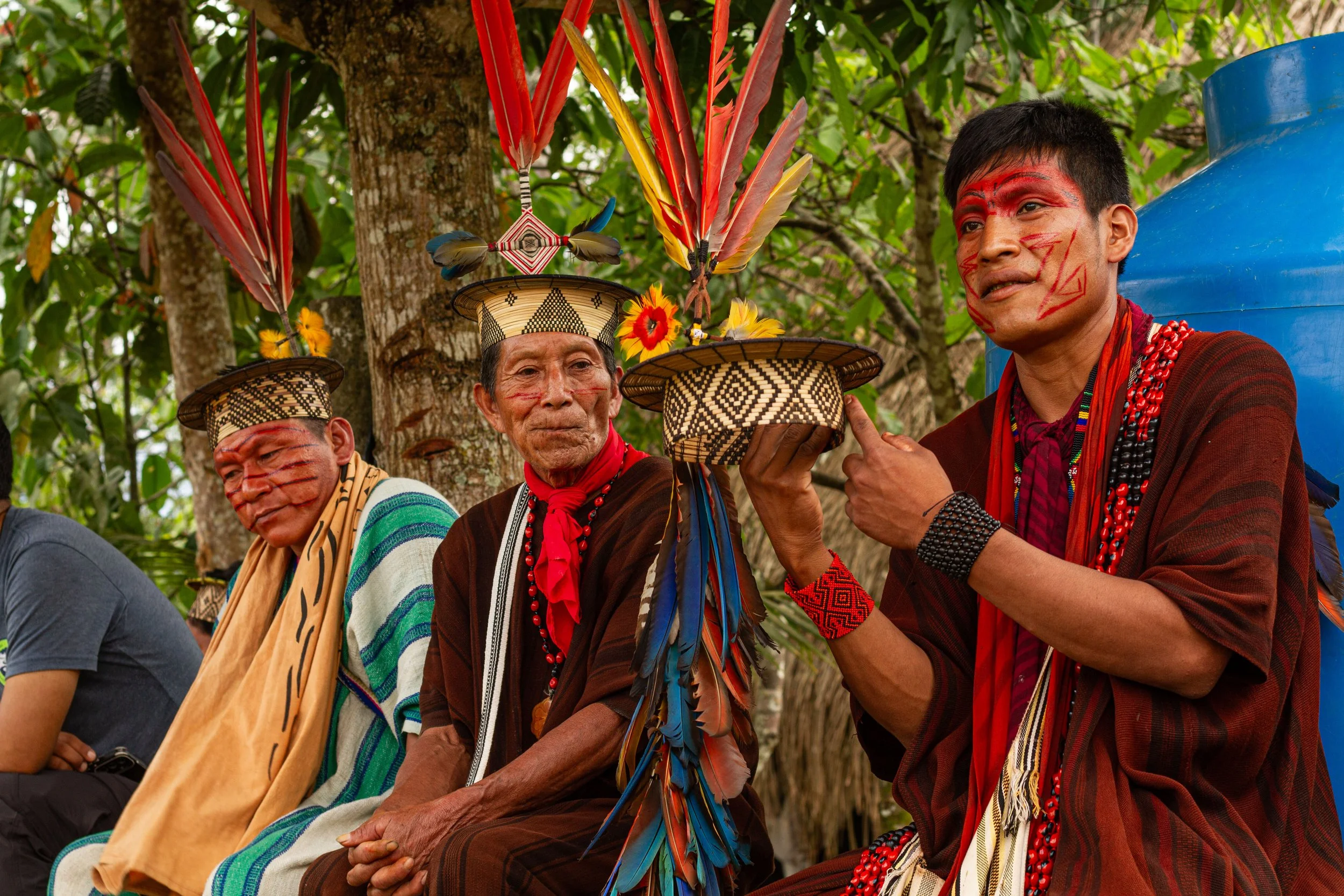
Participants share knowledge about traditional headdresses and other cultural items / Photo: Victoria Tuesta © UAC
The gathering also created opportunities for women from different communities to learn traditional crafts from one another. Jessica Camacllanqui Torres, a Yanesha leader from the Koshireni Native Community in Yurúa, participated in making feather earrings and learning other featherwork techniques.
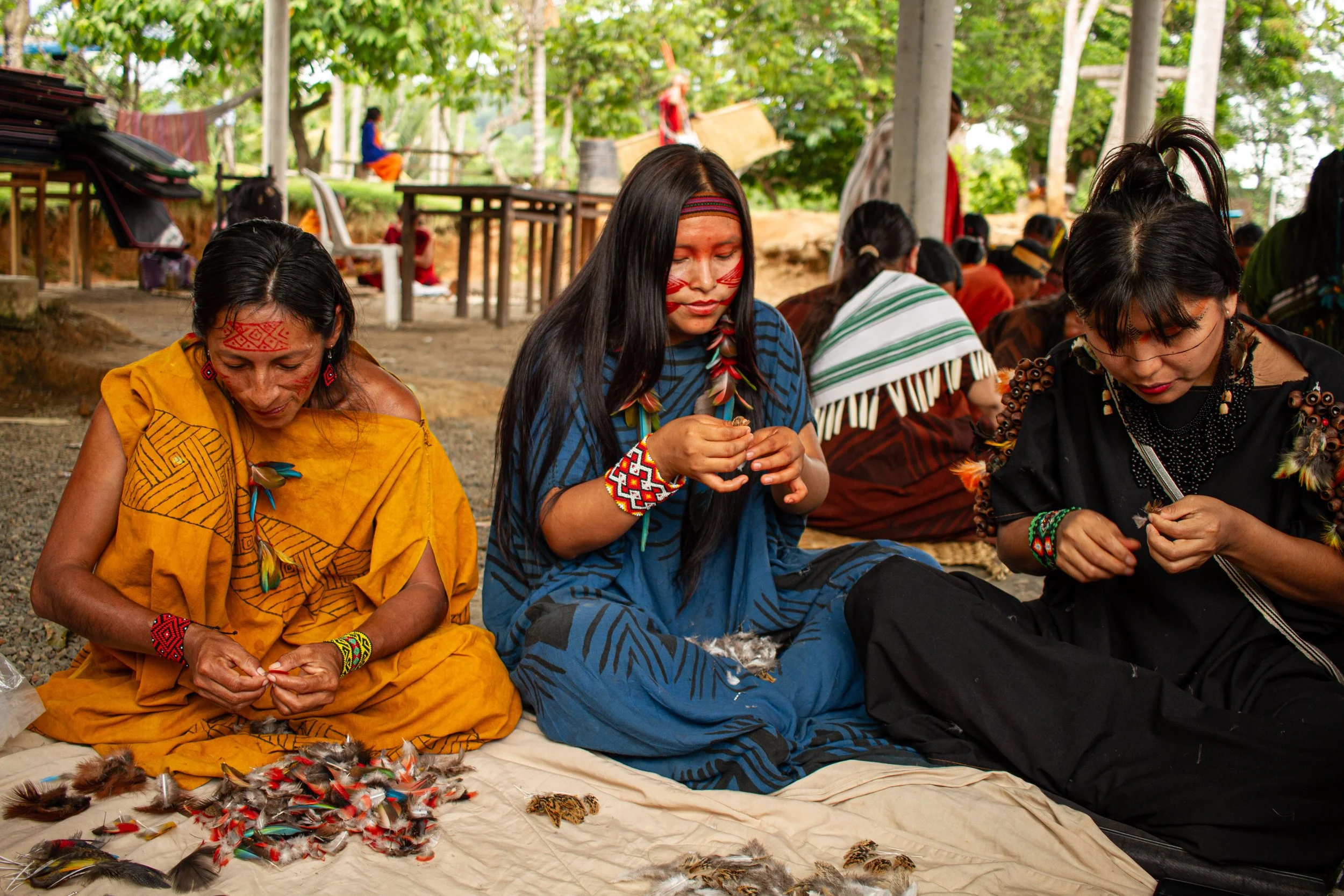
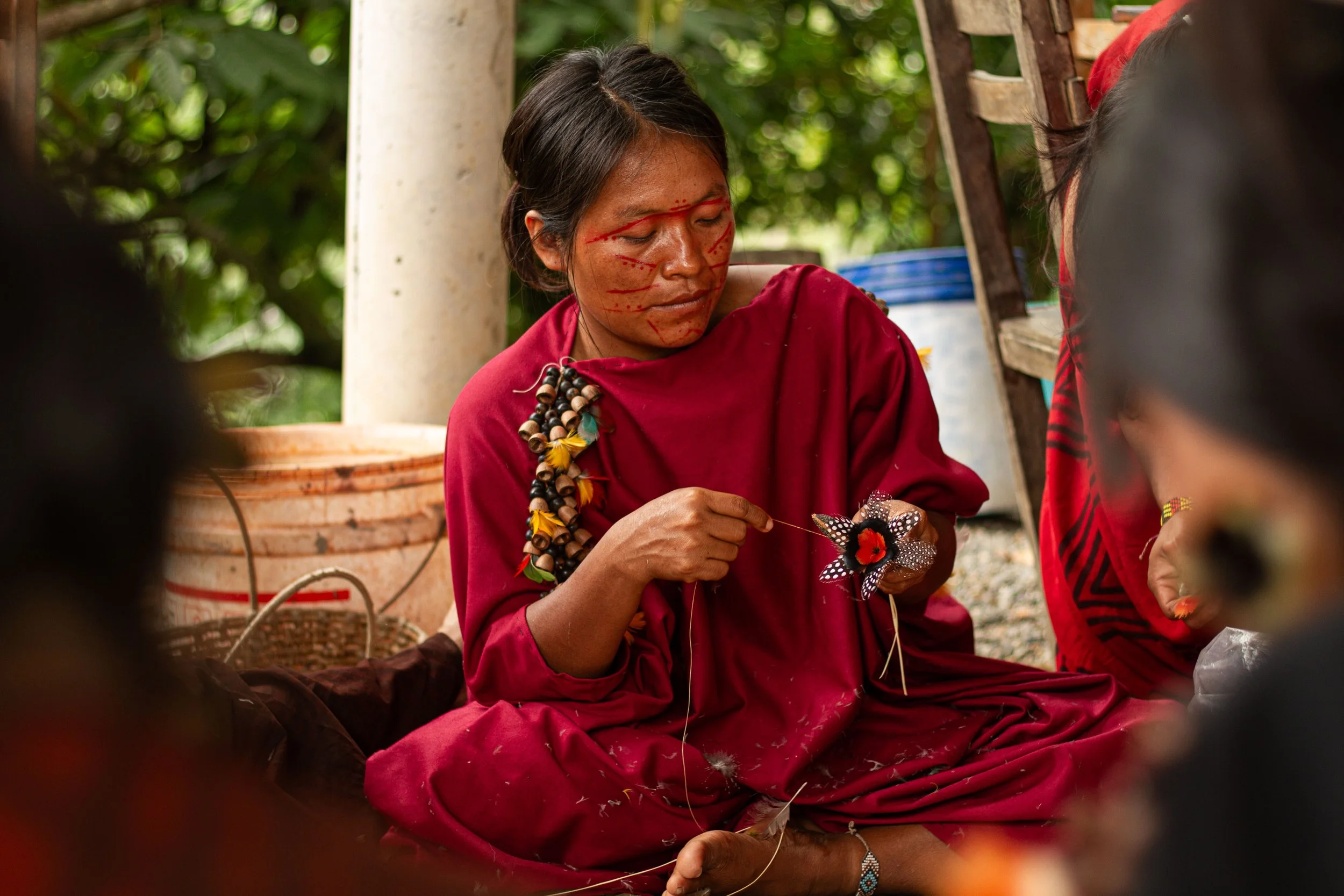
Indigenous women share techniques for making feather handicrafts / Photo: Victoria Tuesta © UAC
The experience allowed her to discover new techniques, refine existing skills, and reflect on how to increase recognition of the value of handicrafts produced in her community.
Knowledge Rooted in the Forest
The connection between cultural expressions and the natural environment was present throughout the gathering. Participants shared knowledge about using seeds, feathers, and other forest materials to make musical instruments and handicrafts.
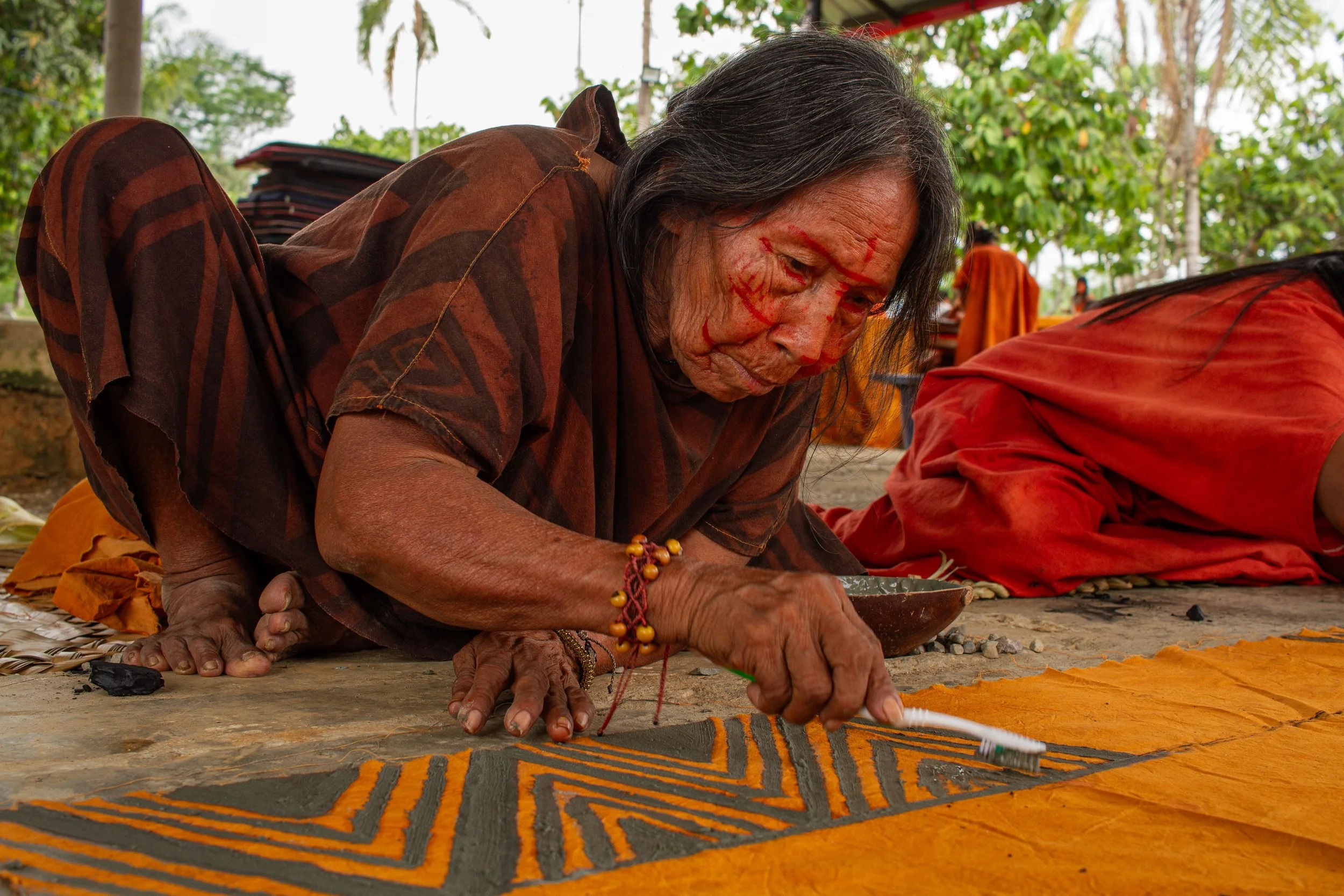
An Asháninka elder paints traditional geometric patterns on a cushma / Photo: Victoria Tuesta © UAC
Percy Amaro, a member of the Asháninka people, former leader of the Central de Comunidades Nativas de la Selva Central (CECONSEC), and technical collaborator with the Shironi ensemble, explained that music is closely connected to Indigenous peoples' worldviews.
"Music does not simply emerge on its own; it comes from the inspiration of our worldview," he said.
From his perspective, conserving forests and territories is also essential to sustaining the cultural knowledge associated with them.
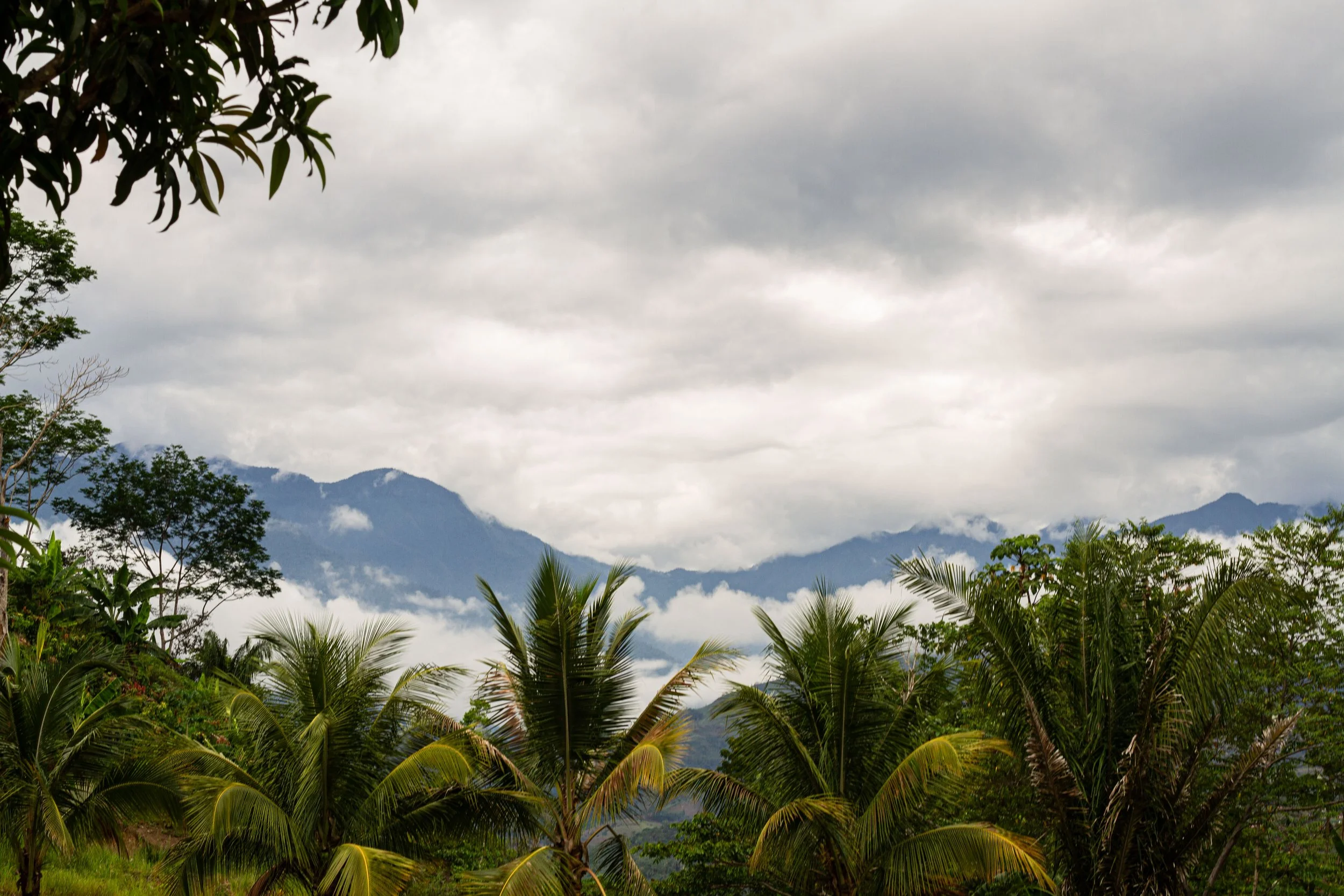
Forests and mountains in the Anaro Native Community, Kimbiri, Cusco / Photo: Victoria Tuesta © UAC
Bringing Knowledge Back to Their Communities
Beyond the performances and workshops, a recurring theme was the transmission of traditional knowledge to children and young people.
This concern is already reflected in the work of some ensembles. Hernán Barbosa Oré, Matsigenka director of the Eroti ensemble from the Kepachiari Native Community in Kimbiri, explained that his group has eight members, including two children. In his community, they also organize activities with preschool and primary school students to introduce them to traditional instruments, customs, and cultural expressions.
From Satipo, Néstor Santos César, Asháninka director of Runi Chokioki, described the knowledge gained in Anaro as a seed he hopes to share with young people in his community. Among his aspirations, he mentioned establishing a cultural learning space to support the continued transmission of this knowledge.
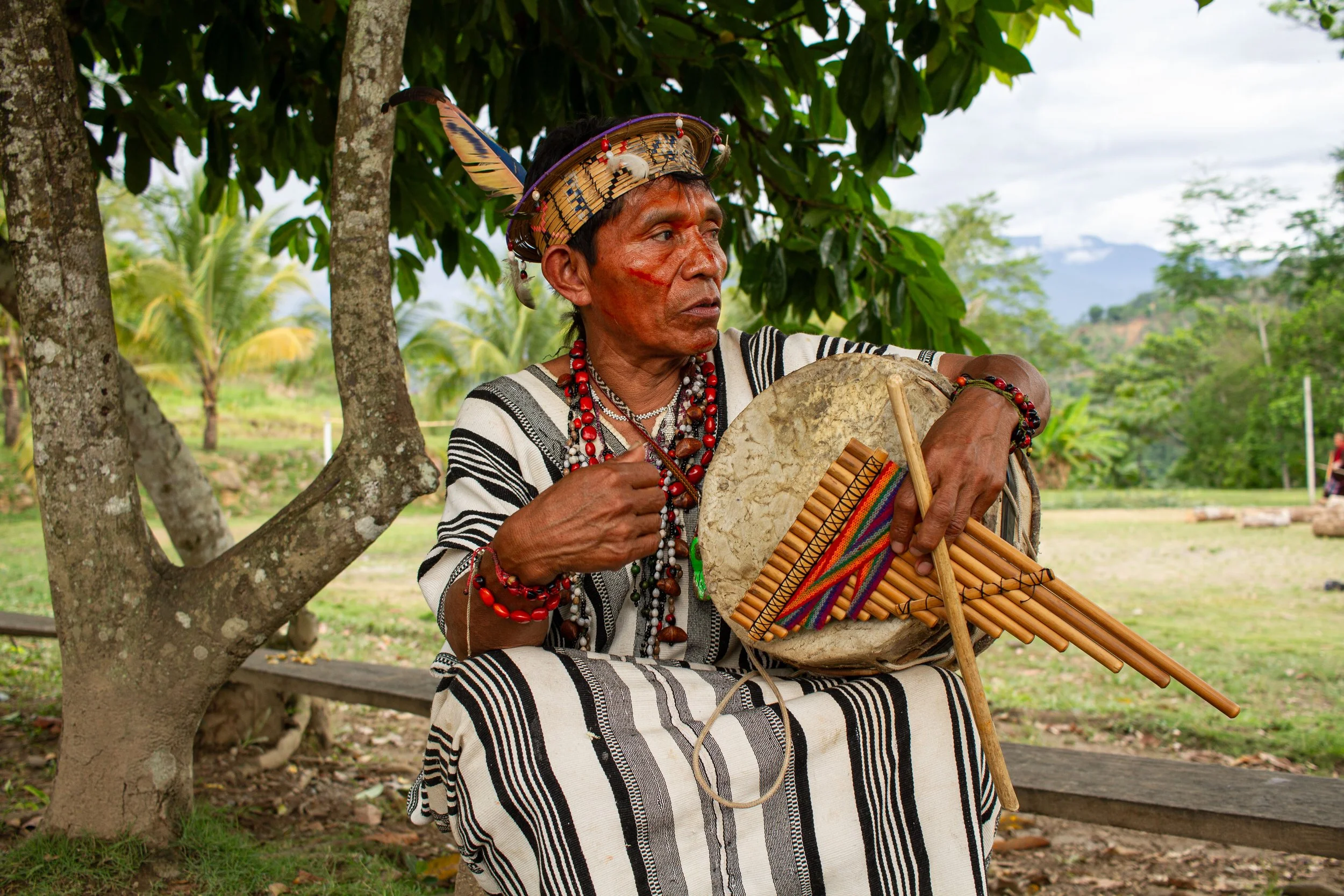
Néstor Santos César, Asháninka director of the Runi Chokioki ensemble, presents traditional musical instruments during the gathering / Photo: Victoria Tuesta © UAC
Concerns about the continuity of these practices were also expressed by Ruth Risco Palomino, an Asháninka artisan and member of the Shironi ensemble from Anaro. She observed that some people are moving away from wearing traditional clothing and cultural adornments. For her, sharing this knowledge with representatives from other communities is one way to encourage its continuity.
A similar reflection emerged among the participants from Yurúa. Jessica Camacllanqui noted that some traditional customs are becoming less common in Koshireni and that the knowledge gained during the gathering could help revive them. Despite the long journey to Anaro, she emphasized the value of learning from other Indigenous peoples and her intention to share what she learned with Yanesha and Ashéninka children and young people in her community.
At the end of the gathering, participants returned home with new experiences in music, instrument making, handicrafts, and other cultural practices that they hope to share in their communities. The exchange highlighted different approaches to passing on this knowledge and the initiatives Indigenous participants themselves are leading to ensure its continuity across generations.