Territory, Security, and Organization: Priorities Raised by the Communities of the Yurúa
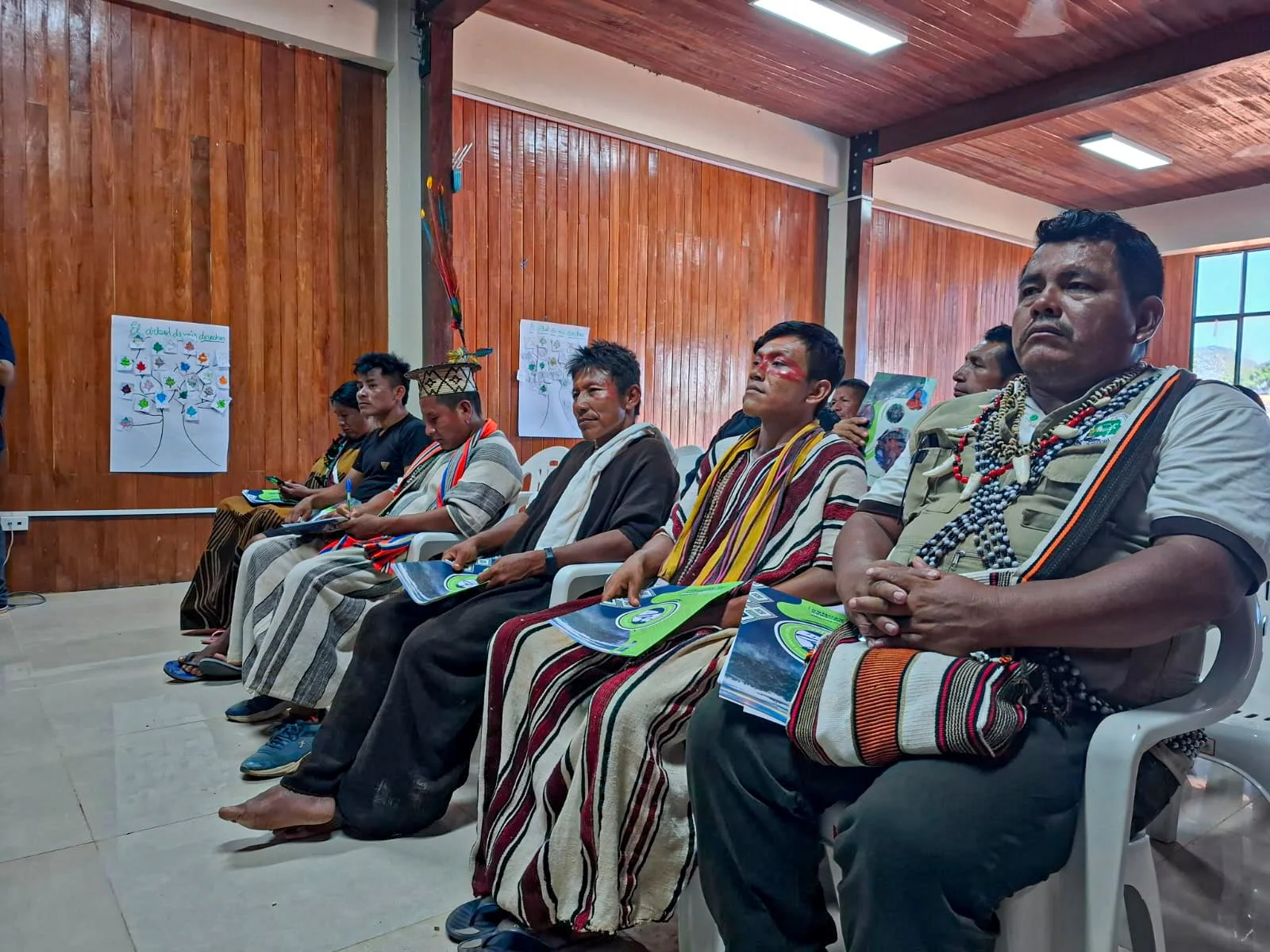
Indigenous authorities and representatives from Yurúa communities during ACONADIYSH’s Annual Congress, held from August 27 to 29 in Puerto Breu.
During ACONADIYSH’s Annual Congress, Indigenous authorities and representatives from the Yurúa raised demands in response to the expansion of illegal activities, the limited presence of the State, and the risks faced by those who defend their territories. The gathering concluded with statements calling for greater State protection and stronger Indigenous border surveillance.
From August 27 to 29, representatives of Indigenous communities from the Yurúa gathered in Puerto Breu for the Annual Congress of the Association of Native Communities for the Integral Development of Yurúa Yono Sharakoai (ACONADIYSH).
Over the course of the gathering, the communities discussed concerns related to territorial security, illegal activities, the protection of Indigenous defenders, organizational strengthening, and women’s participation.
“There is no State presence”
Fernando Aroni, president of ACONADIYSH, identified the limited presence of the State as one of the main concerns in the face of the threats affecting the communities.
“Our greatest concern is that there is no State presence. Second is the increase in illegal activities, including drug trafficking, copaiba oil extraction, human trafficking, and indiscriminate hunting and fishing.”
These concerns were translated into concrete demands. In its August 29 statement, ACONADIYSH called on the State to establish and implement a district police station in Yurúa, set up a border control post in the Hito 38 area, and create a multisectoral working group bringing together public institutions, local authorities, and Indigenous organizations.
It also called for effective and confidential protection measures for Indigenous leaders and community members who defend their territories.
Defending the territory for future generations
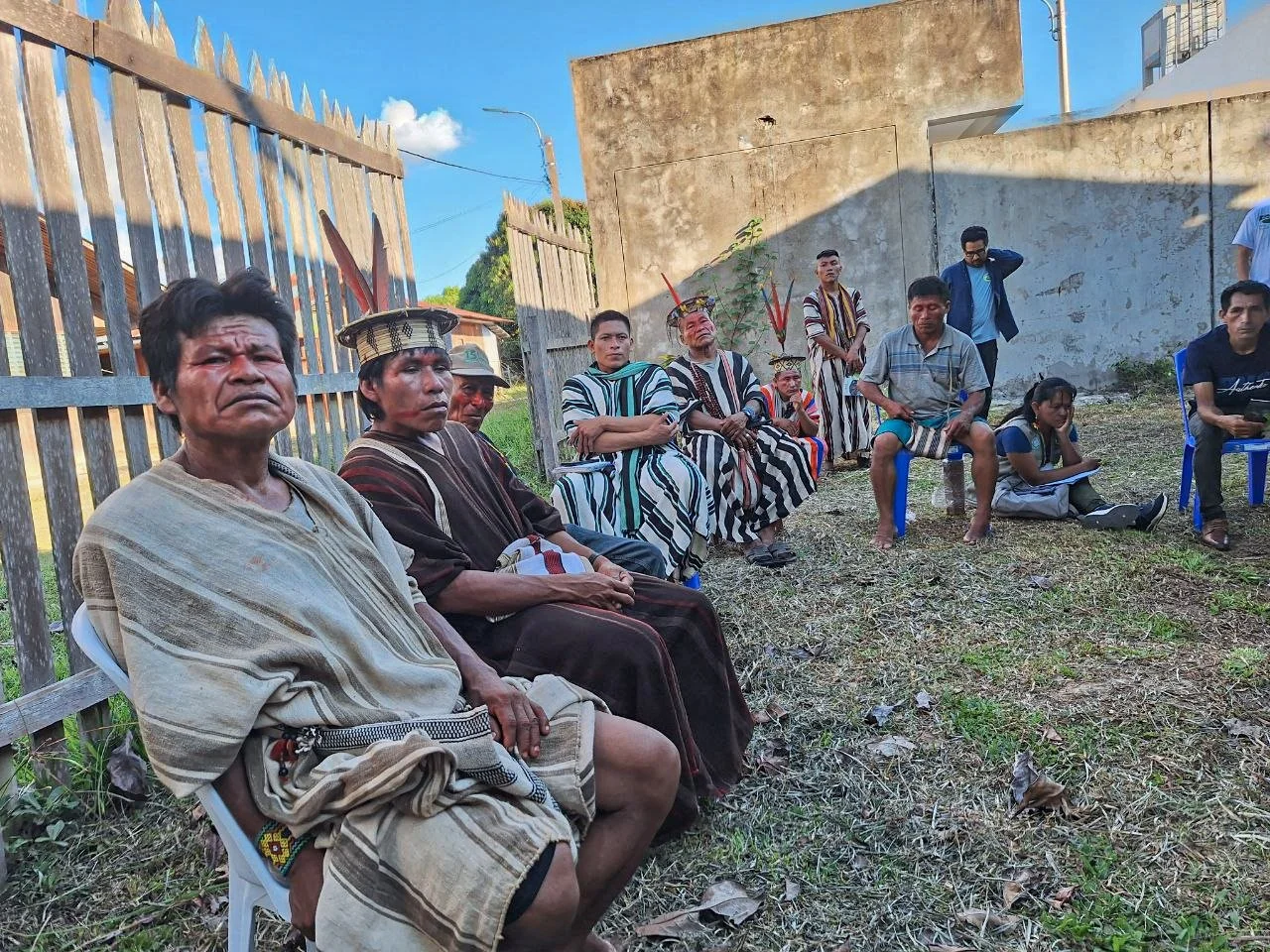
Indigenous representatives and a police officer during one of the sessions of ACONADIYSH’s Annual Congress.
Elvis Mamani, forest custodian from the Native Community of Koshireni, described the risks faced by those involved in territorial surveillance and their concerns for the safety of their families.
“We defend our territory so that our children are not left without land or without knowing what exists in nature.”
The communities’ own response was also reflected in the statements issued on August 29. ACONADIYSH reaffirmed its commitment to strengthening the Indigenous Border Guard as a community-based mechanism for surveillance, prevention, and early warning.
In a separate statement, the Guard called on the State to advance the legal recognition of Indigenous Guards and committed to conducting periodic visits to communities to gather alerts, identify risks, and strengthen territorial surveillance.
Women’s voices in decision-making
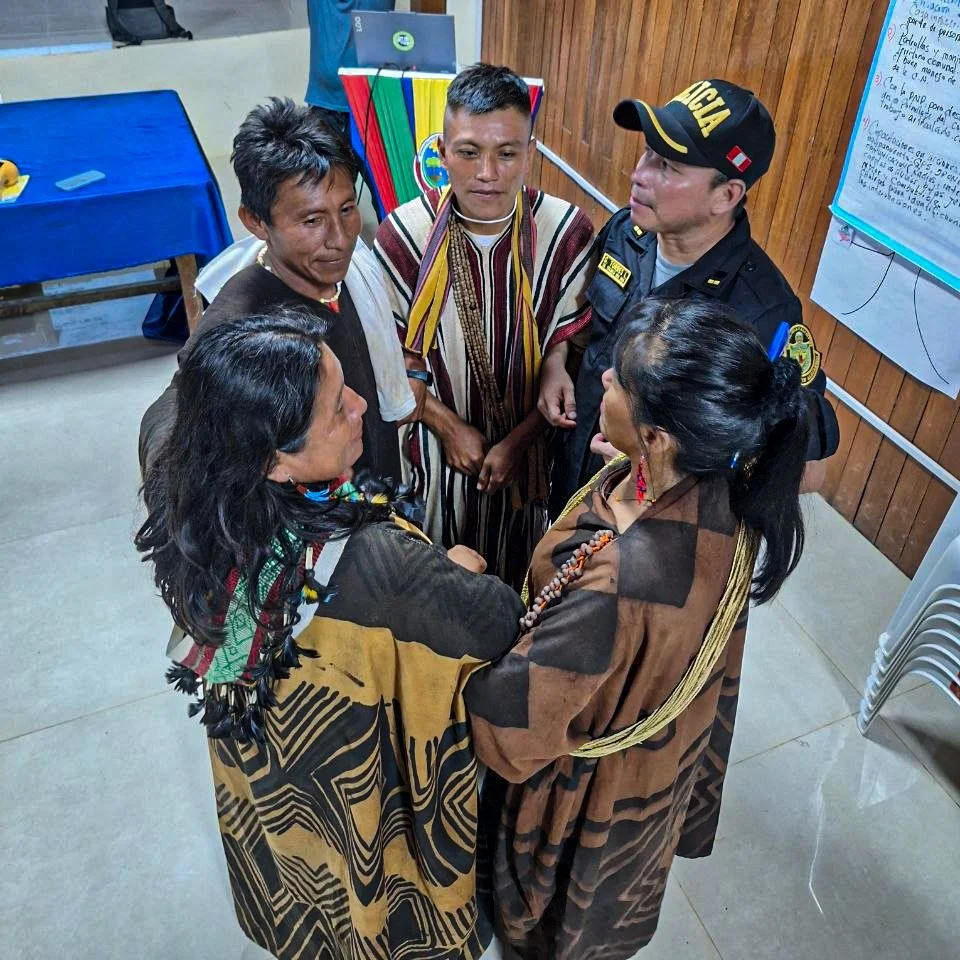
Indigenous authorities and representatives from Yurúa communities during a session of ACONADIYSH’s Annual Congress in Puerto Breu.
For Imelina Benavides, head of the Native Community of Koshireni, protecting the territory also means ensuring that decisions made within the communities are respected.
“What we want is to protect our territory and ask that [...] the decisions we make in our communities be respected.”
Drawing on her experience as a community authority, she also noted that women’s active participation in these spaces remains limited:
“We all have rights, we all have a voice, and we all have opinions that must also be respected.”
She explained that the Congress was also an opportunity to learn more about their rights and recognize the importance of greater participation by women in community decision-making.
From dialogue to demands and commitments
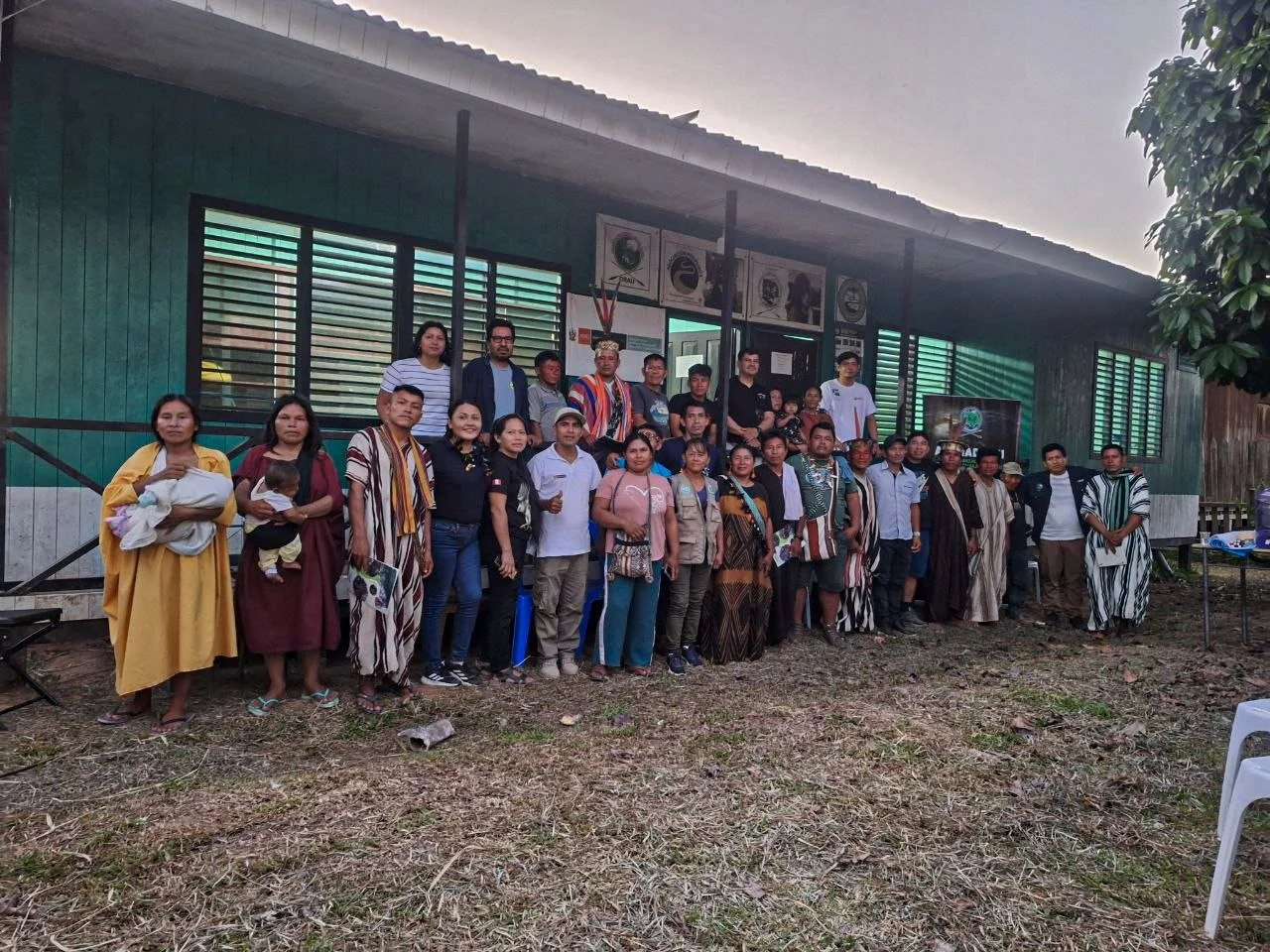
Representatives from Indigenous communities, authorities, and organizations participating in ACONADIYSH’s Annual Congress in Puerto Breu.
The statements signed on August 29 set out demands and commitments that extend beyond the three-day gathering: a stronger and more effective State presence, protection for Indigenous defenders, strengthening of the Indigenous Border Guard, territorial surveillance, and a coordinated response to the threats facing the communities of the Yurúa.
As ACONADIYSH states in its declaration: “Yurúa demands respect, security, and protection for its Indigenous communities and territorial defenders.”
Upper Amazon Conservancy (UAC), together with ORAU, AFRONTA, and the District Municipality of Yurúa (MDY), supported the organization and facilitation of the Congress, led by ACONADIYSH and its communities.