In Saweto the Challenge is both Territorial Protection and Sustainable Livelihoods
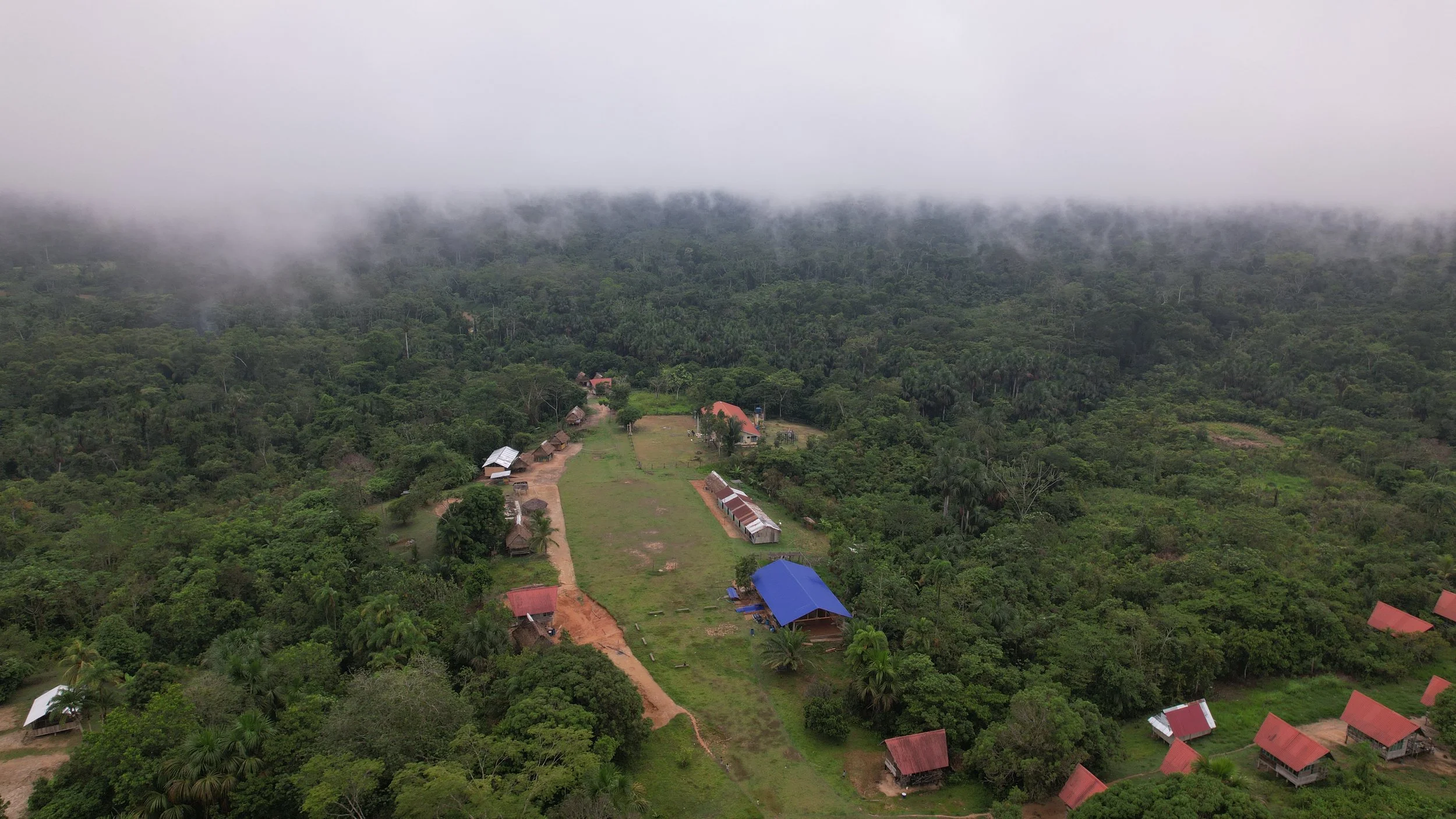
An aerial view of the Alto Tamaya–Saweto Native Community in the Alto Tamaya River basin, Ucayali, Peru.
For the Asheninka community of Alto Tamaya–Saweto, located near the Peru–Brazil border, the challenge extends beyond forest protection. It also involves confronting isolation, limited state presence and the daily difficulties of sustaining life across a 78,129-hectare territory accessible only after several days of river travel.
Within the context of these challenges the community began developing its 2023–2030 Life Plan in 2023, after the Saweto General Assembly agreed to seek technical support from Upper Amazon Conservancy (UAC) to facilitate a participatory planning process.
The process was built through meetings and participatory assessments involving leaders, women, youth and Ashéninka families to define the priorities they consider essential for their future. Finalized in 2024, the document outlines objectives related to territorial protection, community organization, conservation and sustainable livelihoods.
“For Saweto, it was important to develop the Life Plan with all community members, thinking about our needs and how to organize work within the community,” said Karen Shawiri, chief of Saweto.
More than a project portfolio, the Life Plan seeks to answer a central question: how to remain in the territory without depending on activities that harm the forest, in a region historically affected by illegal logging, illicit economies and limited access to basic services?
Some of those priorities were revisited during a community workshop held on April 19, 2026, alongside territorial monitoring activities and assessments of sustainable initiatives carried out in partnership with UAC and the Regional Directorate of Agriculture of Ucayali (DRAU).
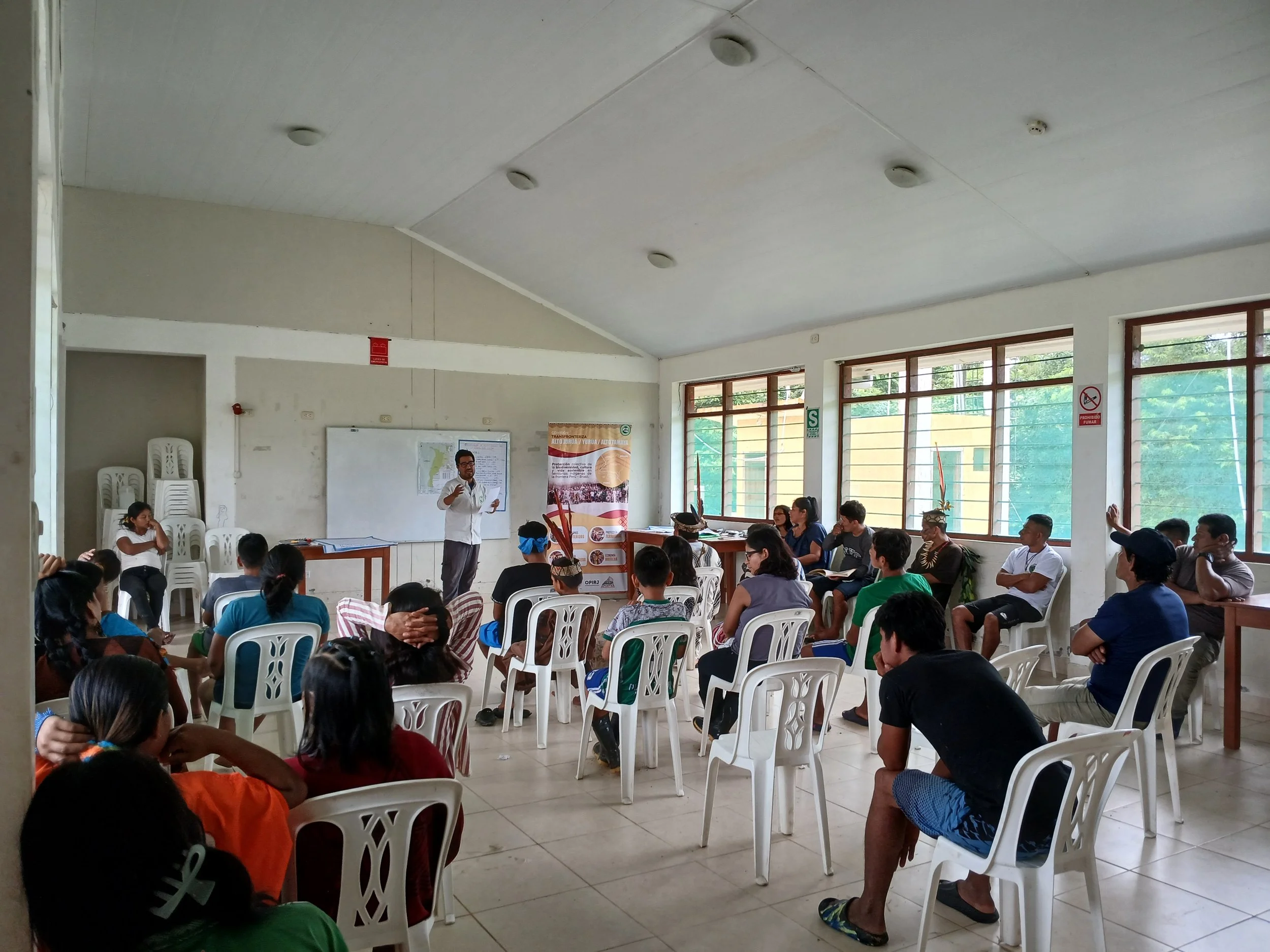
Saweto community members participate in a dialogue on territorial priorities and sustainability during a workshop held in April 2026.
Among the activities conducted was the verification and restoration of five territorial boundary markers in sectors V7 through V11, work carried out together with the community monitoring committee to strengthen oversight in a border region that remains exposed to external pressures.
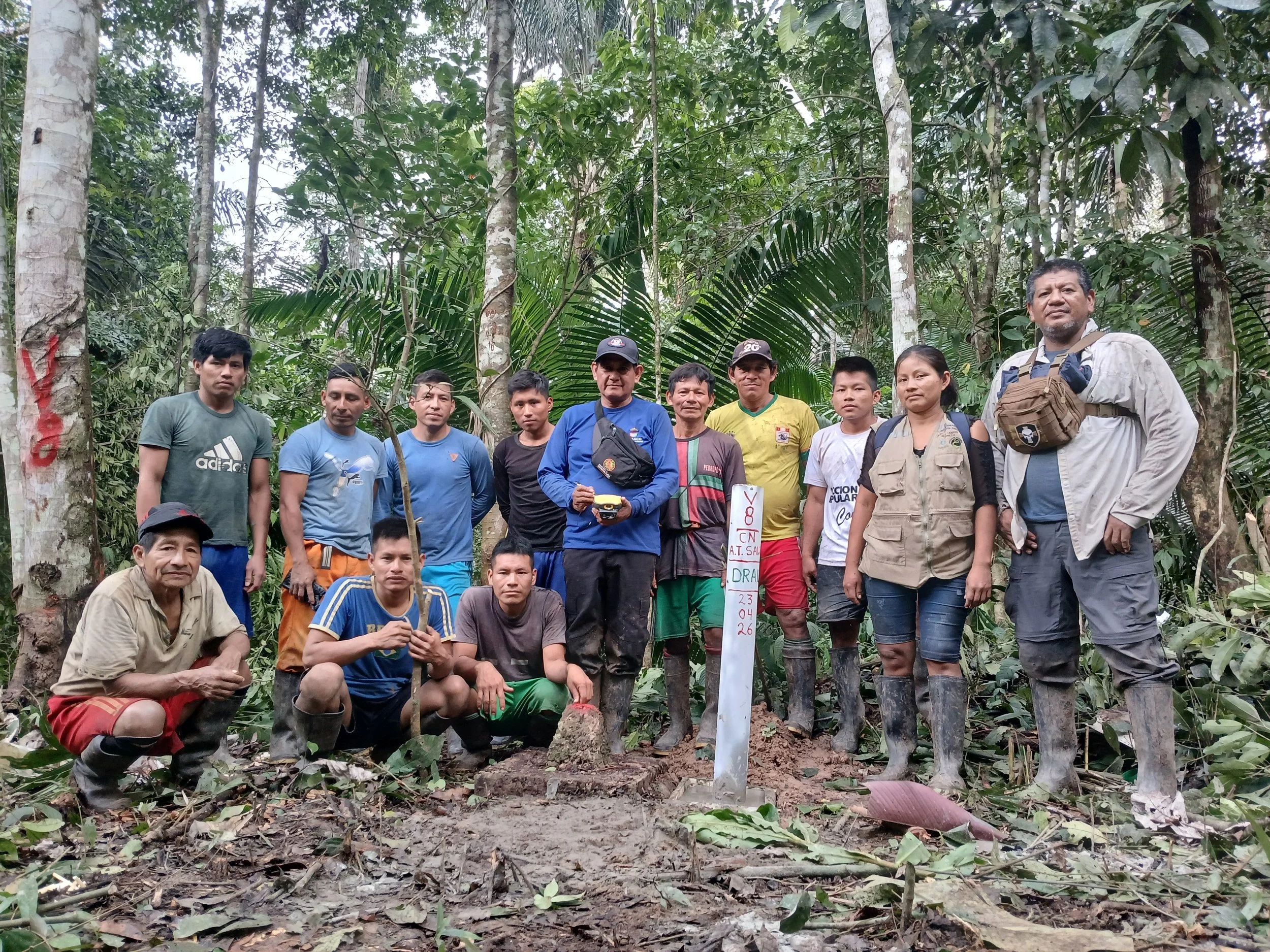
Members of the community monitoring committee, Saweto representatives and technical teams during the restoration of territorial boundary markers in April 2026.
In Saweto, territorial monitoring is not only linked to environmental conservation. It is also part of a broader strategy to ensure that families can remain in the territory and reduce risks associated with illegal activities along the Amazonian frontier.
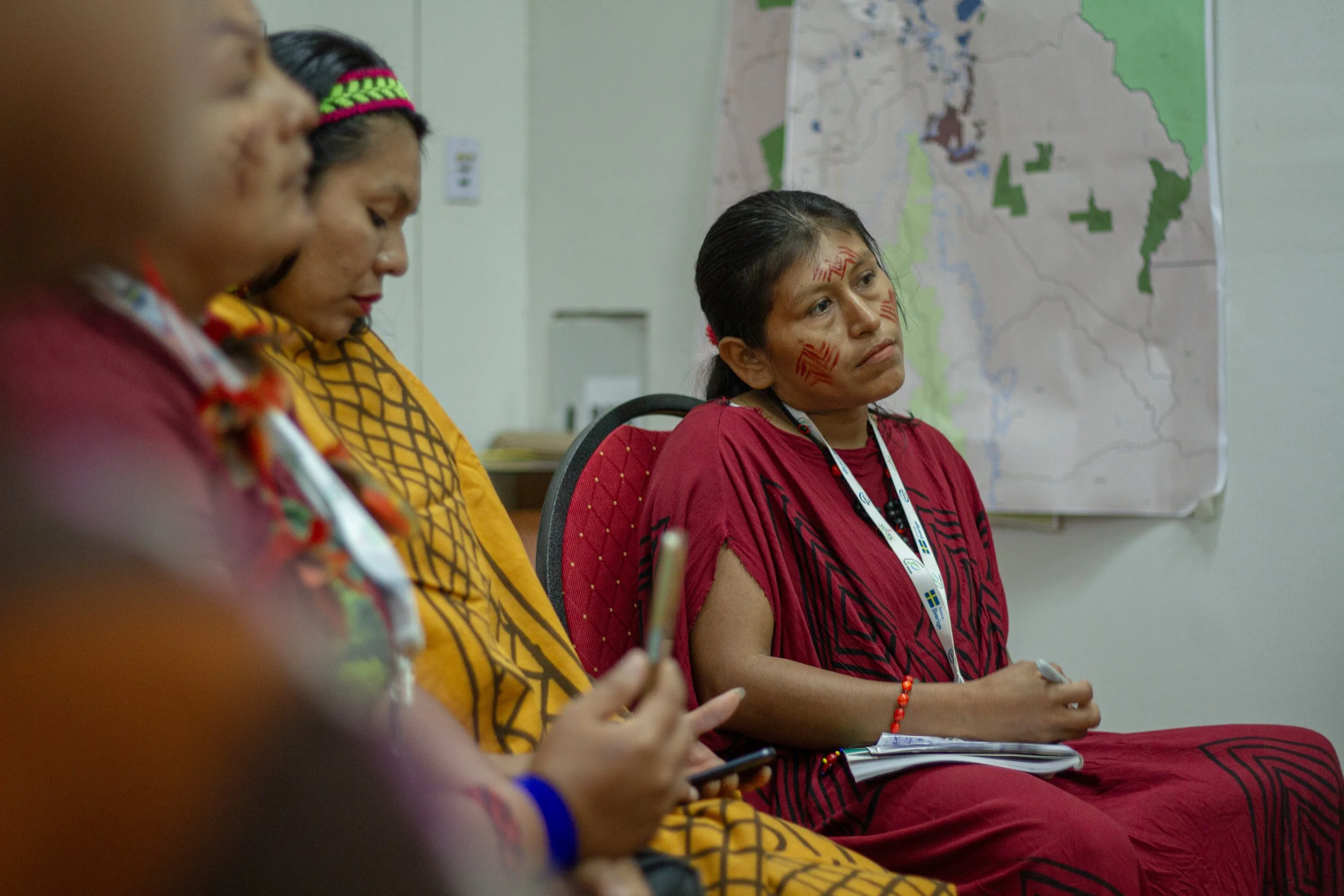
Karen Shawiri, chief of the Alto Tamaya–Saweto Native Community.
The Life Plan also identifies challenges related to food security, income generation and connectivity. In that context, recent field activities included discussions on fish farming initiatives, strengthening cacao production and reactivating a community rice mill.
According to community members, these proposals seek to address concrete challenges: reducing dependence on external products, improving food security and overcoming logistical difficulties caused by geographic isolation.
Shawiri noted that the distance to Pucallpa and the high cost of transportation continue to limit economic opportunities for families in the community.
She also emphasized that several of the actions currently being implemented are directly connected to priorities previously identified during the Life Plan process.
“The Life Plan includes exactly the kind of work that is already being carried out with UAC, such as forest stewardship to monitor our territory and the rice mill so we can continue producing rice,” she said.
Shawiri also believes that recent community dialogue sessions would benefit from additional time to further explore the priorities identified by community members, an observation that reflects the broader challenge of sustaining collective planning processes in remote areas of the Amazon.
Saweto secured legal title to its territory in 2015 after years of advocacy led by Ashéninka leaders confronting illegal logging along the Amazonian border. The community gained international attention following the 2014 murder of four community leaders, one of the most emblematic cases of violence against Indigenous defenders in the Peruvian Amazon.
More than a decade later, the community continues working to ensure that the decisions outlined in its Life Plan remain more than a written document and become sustained actions to protect the territory and support life in one of the most isolated and vulnerable regions of the Peruvian Amazon.