Yurúa Communal Conservation Concession seeks OMEC Recognition for Protecting 45,000 Hectares
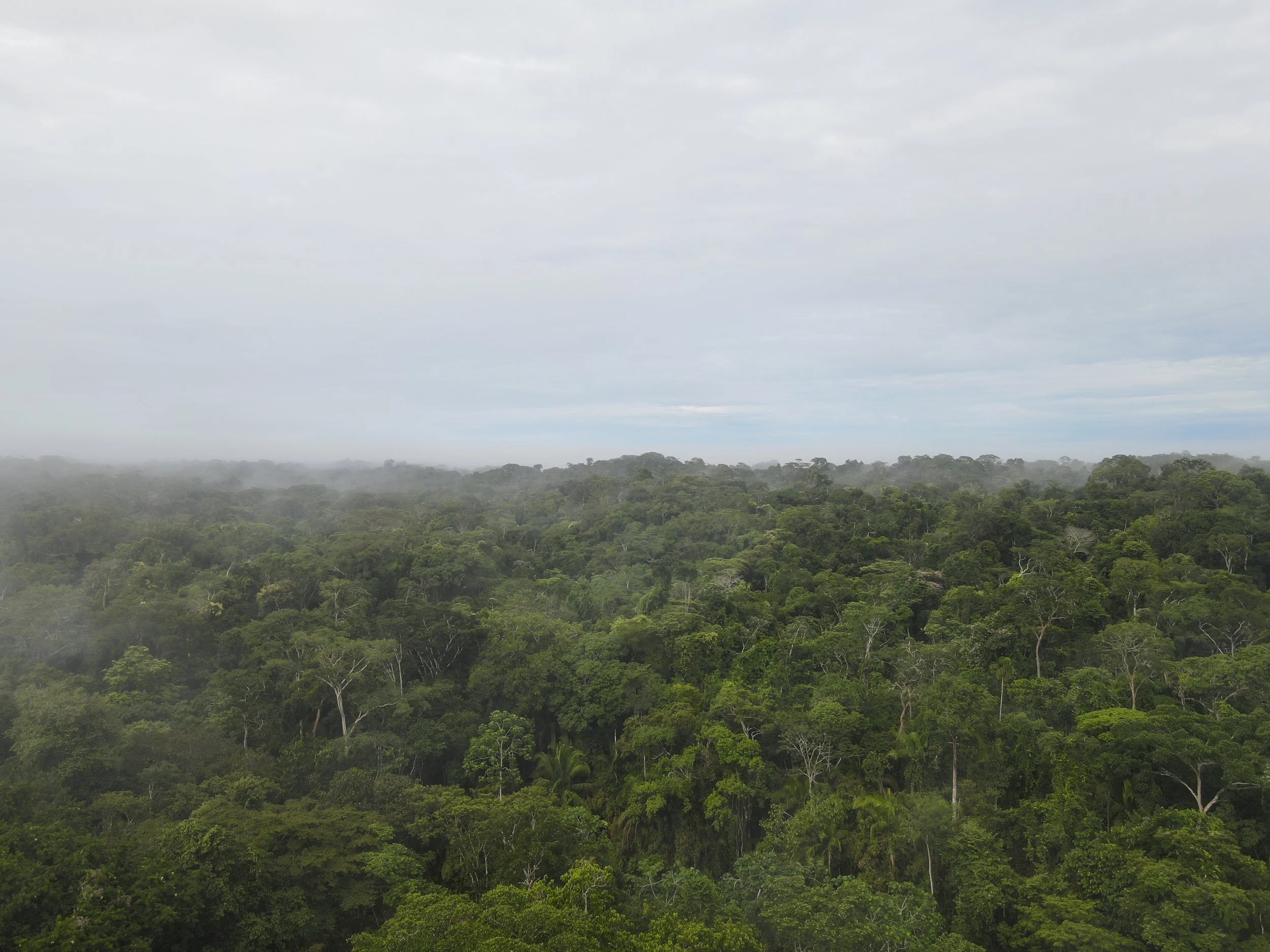
An aerial view of the conservation concession managed by ACC-Yurúa in the Yurúa River basin, Ucayali.
The Yurúa Community Conservation Association (ACC-Yurúa), made up of nine Indigenous communities from the Asháninka, Yaminahua, Amahuaca, and Yanesha peoples of the Yurúa River basin, has been leading efforts to conserve more than 45,000 hectares of Amazon rainforest along the Peru–Brazil border for over a decade.
The conservation concession managed by the organization is currently in an advanced stage of evaluation for recognition as an Other Effective Area-Based Conservation Measure (OMEC), an internationally recognized conservation designation under the Convention on Biological Diversity (CBD) that identifies areas effectively contributing to biodiversity conservation outside traditional protected area systems.
Located adjacent to the Murunahua Indigenous Reserve and Alto Purús National Park, the concession forms part of one of the most important conservation landscapes in the Peruvian Amazon.
“Ecological processes extend beyond the boundaries of protected areas,” said Edgardo Marthans Castillo, Director of Biological Diversity at Peru’s Ministry of the Environment (MINAM). “The concession is located next to Alto Purús National Park and complements the conservation efforts carried out within the protected area.”
A Process More Than a Decade in the Making
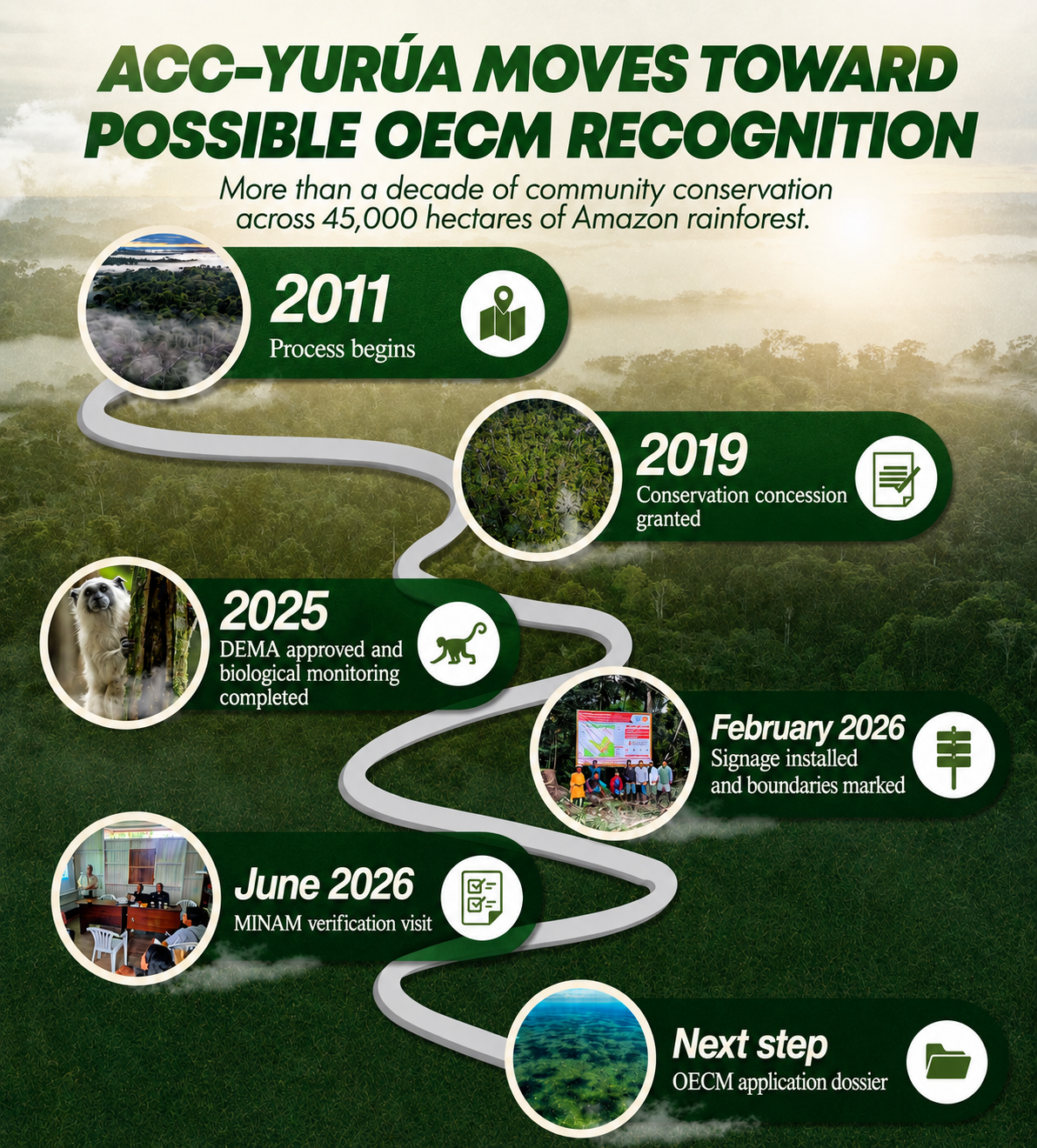
Key milestones in the conservation process led by ACC-Yurúa between 2011 and 2026.
The potential recognition of the concession as an OECM represents one of the latest milestones in a conservation journey that began years earlier.
The process traces its origins to 2011, when efforts to strengthen local governance and territorial management began in the Yurúa River basin. In the years that followed, Indigenous communities, with technical support from Upper Amazon Conservancy (UAC) and ProPurús, advanced land titling processes, established the Yurúa Community Conservation Association (ACC-Yurúa), and secured a conservation concession, which was officially granted in 2019.
Since then, ACC-Yurúa has led initiatives focused on forest protection, territorial monitoring, and strengthening community governance.
One of the most significant milestones came in May 2025, when the Atalaya Forestry and Wildlife Operational Office approved the concession’s Management Declaration (DEMA), the planning instrument that guides concession management and formalizes conservation actions implemented within the area.
This approval followed a series of technical and administrative evaluations, including a favorable review by the Ministry of Culture of the PIACI Contingency Plan, a field inspection conducted in October 2024, and a biological assessment carried out in February 2025 with the participation of ACC-Yurúa, UAC specialists, and the management team of Alto Purús National Park.
Scientific Evidence in a Biodiversity Corridor
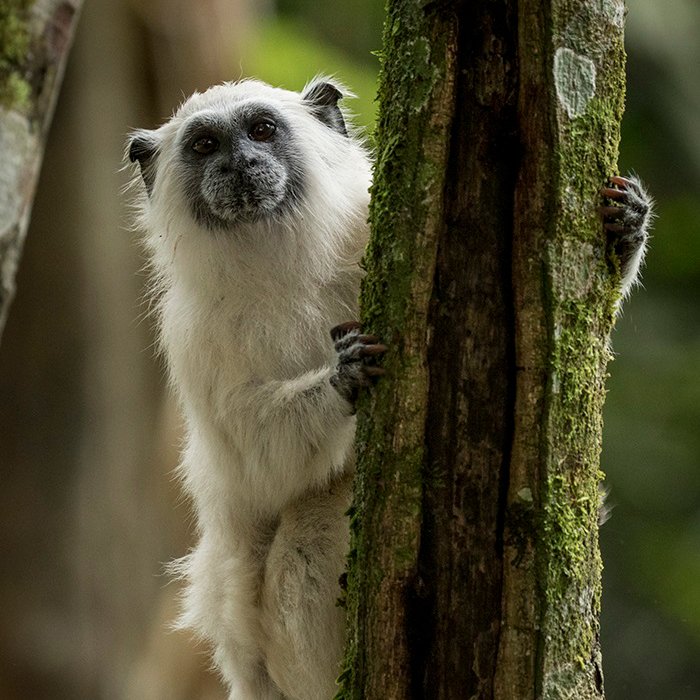
The White Tamarin (Leontocebus weddelli melanoleucus) was among the species recorded during the 2025 biological assessment. Photo: Glauco Olivera
The biological assessment conducted in February 2025 confirmed the presence of the White Tamarin (Leontocebus weddelli melanoleucus), a primate endemic to the region.
Monitoring efforts also documented representative Amazonian wildlife, including the Black-faced Spider Monkey (Ateles chamek), the Red Howler Monkey (Alouatta seniculus), and the Wing-banded Trumpeter (Psophia crepitans), as well as ecologically important tree species such as mahogany (Swietenia macrophylla) and kapok (Ceiba pentandra).
The assessment also identified threats associated with poaching and illegal fishing activities in areas near the Brazilian border.
According to Arsenio Calle, Head of Alto Purús National Park, the results reinforce the concession’s importance within one of the Peruvian Amazon’s key conservation corridors. He noted that initiatives of this kind can also create opportunities for scientific research while strengthening regional conservation efforts.
Community-Led Territorial Governance
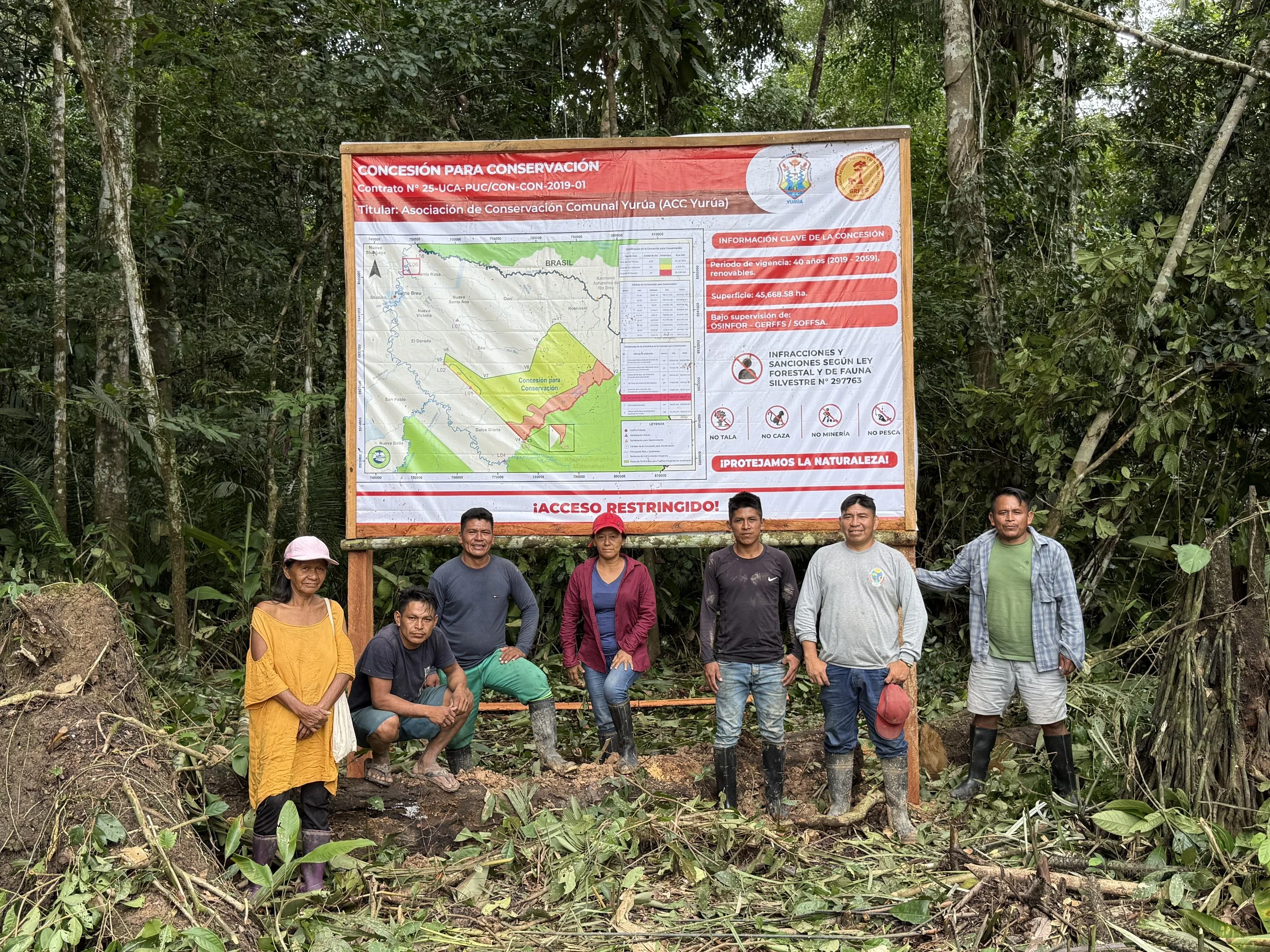
Members of ACC-Yurúa participated in the installation of signage and territorial strengthening activities within the concession.
In February 2026, ACC-Yurúa led the installation of eight conservation signs and the re-marking of concession boundaries in strategic areas of the concession, with the participation of forest custodians and community members.
The activities took place in areas including the Breu and Beu rivers, Alto Yurúa, and Piquiyako, as part of both the OECM process requirements and broader efforts to strengthen territorial management.
From June 2 to 4, 2026, representatives from MINAM, Profonanpe, ACC-Yurúa, ACONADIYSH, UAC, and Alto Purús National Park met in Puerto Breu to review progress and assess the technical documentation supporting the OECM application.
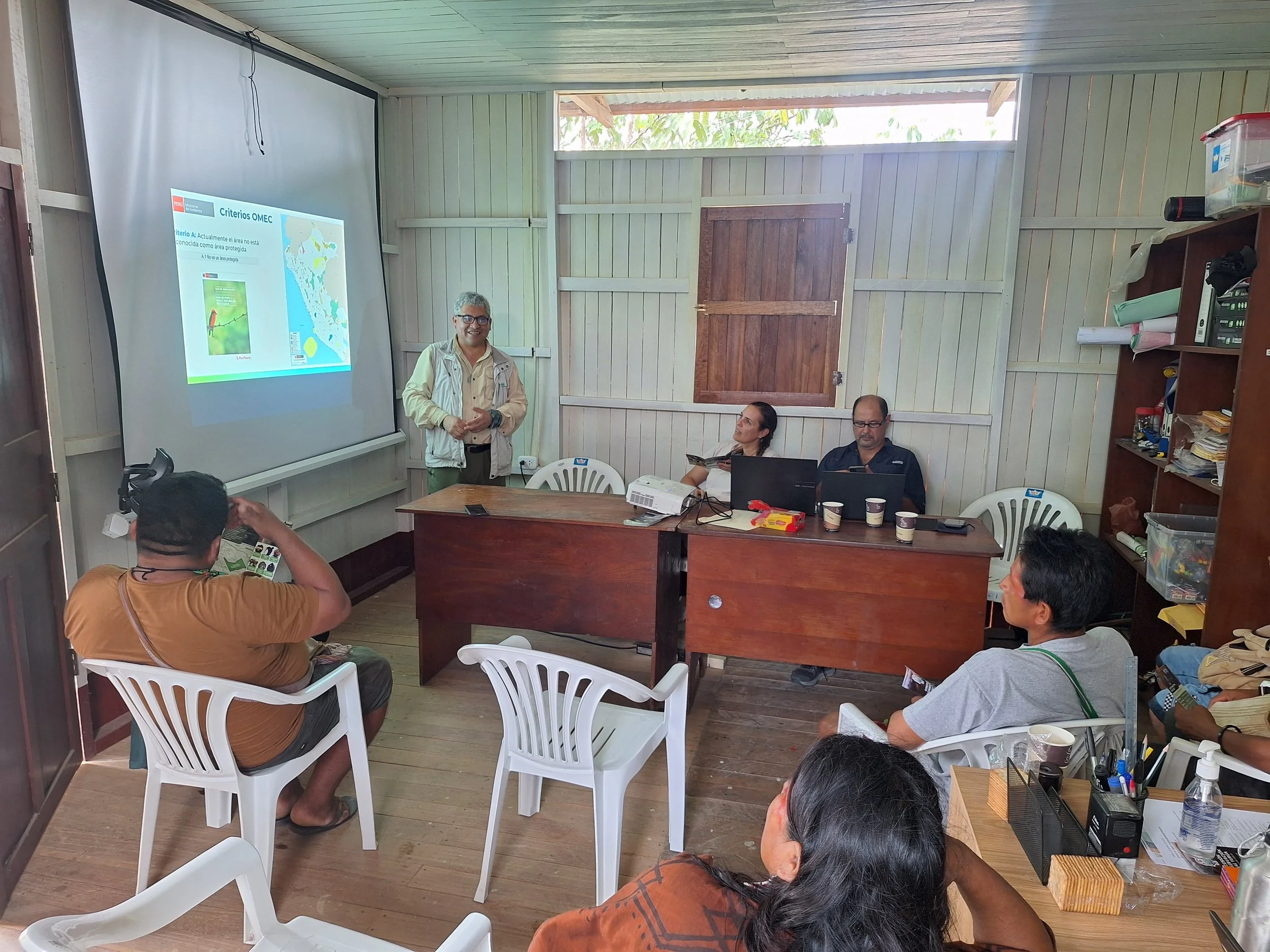
Representatives of institutions involved in the OECM process participated in working meetings held in Puerto Breu in June 2026.
As part of these activities, the team conducted field visits to verify evidence of conservation actions carried out within the concession, including two of the eight signs installed earlier that year.
“The process is currently at a highly advanced stage and already has the technical evidence needed to support the concession’s potential recognition as an OECM,” Marthans said.
The activities were funded by Profonanpe, with technical and logistical support from UAC and institutional backing from ACONADIYSH.
Conservation and Community Well-Being
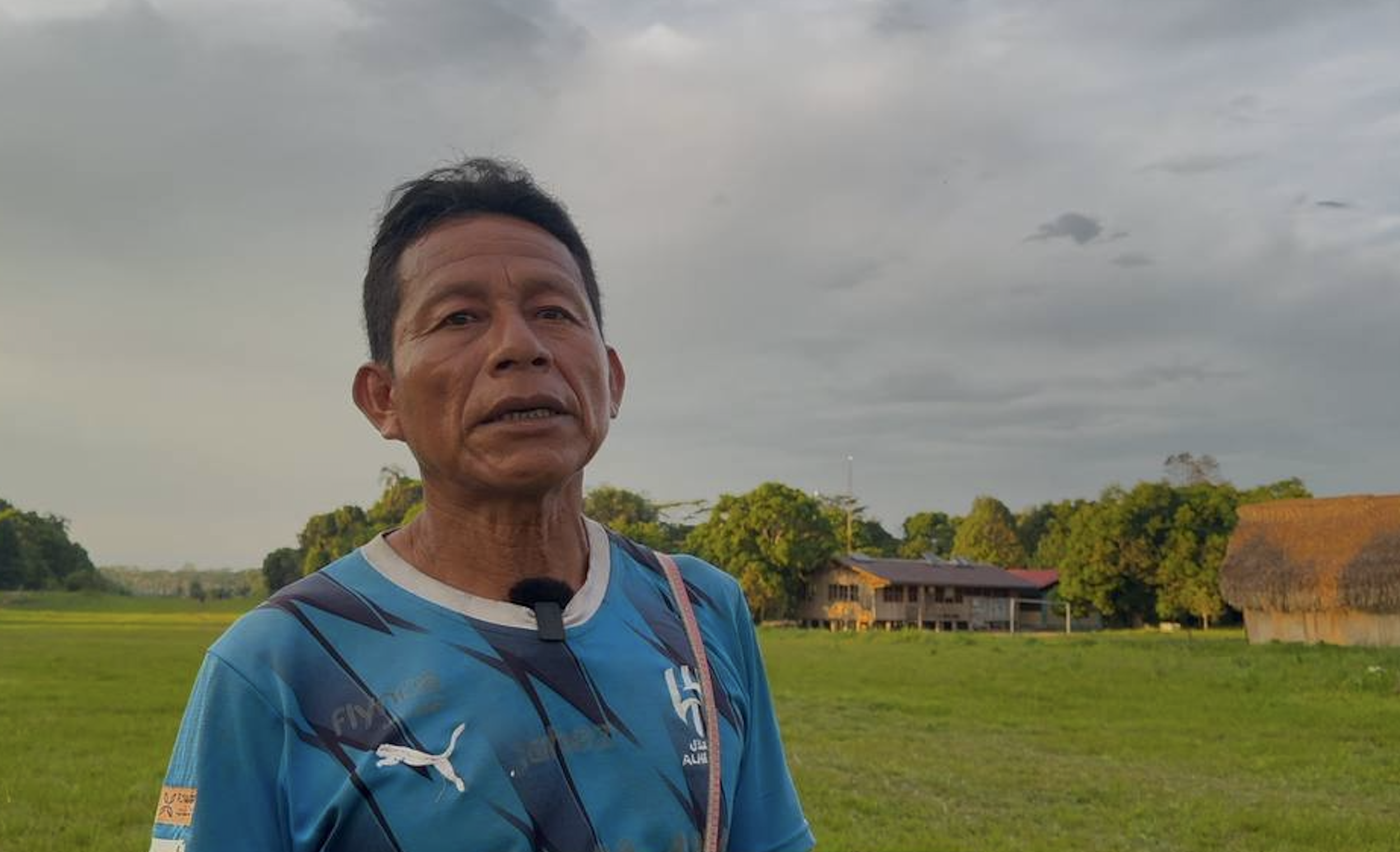
Gerson Mañaningo Odicio, President of ACC-Yurúa.
For Gerson Mañaningo Odicio, President of ACC-Yurúa and an Asháninka community member from the Native Community of Dulce Gloria, progress toward OECM recognition reflects years of work carried out by the communities that make up the association.
“This process has taken time. Several leaders have come and gone, and only now are we beginning to see the results,” he said.
Mañaningo noted that one of the organization’s main challenges remains securing the resources needed to sustain conservation activities and strengthen community-based work across the territory.
“We want to improve the quality of life of the communities of Yurúa, secure funding through our partners, and strengthen our organization,” he said.
“The association cannot function without resources. Without funding, it is difficult to carry out activities and move forward with our goals.”
For the communities that make up ACC-Yurúa, conservation is also closely linked to the sustainable use of forest resources.
“The forest is our marketplace because it provides many of the resources and benefits our families depend on,” he explained.
What Comes Next
The next stage involves the formal submission of the OECM application dossier to Peru’s Ministry of the Environment.
The documentation will then be reviewed by specialists from the Directorate General of Biological Diversity and by the OECM Ad Hoc Technical Working Group, which includes representatives from multiple conservation-related institutions.
If the proposal successfully passes the national evaluation process, ACC-Yurúa’s experience could be incorporated into the World Database on OECMs, the international registry of conservation initiatives recognized under this framework.
If that occurs, the concession managed by ACC-Yurúa would become part of the conservation experiences officially reported by Peru to the Convention on Biological Diversity.